|
Sediment and erosion control maintenance needs are inevitable on construction sites. With the nature of construction activity and rainfall events, it is nearly impossible for controls to stay in perfect condition throughout the entire process. However, the more that your team stays on top of maintenance needs and acts proactively, the better the chances are to keep controls functioning and keep your site in compliance. General BMP Inspection Tips: The best way to stay on top of maintenance needs is to conduct routine inspections according to the guidance provided in the Rainwater and Land Development manual. Controls should be inspected daily for general condition and effectiveness. They should also be inspected after each rainfall event and during a prolonged rainfall. If controls aren’t being inspected on a regular basis, it is easy for small maintenance needs to compound and become larger issues over time. Below are 7 common BMP maintenance needs our urban inspectors see out on site and some tips for staying on top:
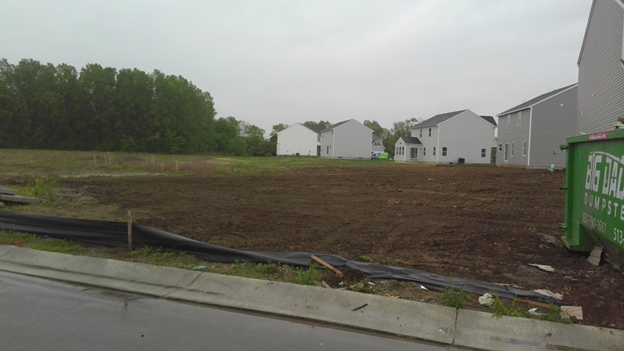 Fix Tips: If silt fence is downed, it may be able to be retrenched and wrapped around the stakes again. Ensure silt fence is properly trenched and pulled taught. If the geotextile material has been damaged, it will need replaced entirely. 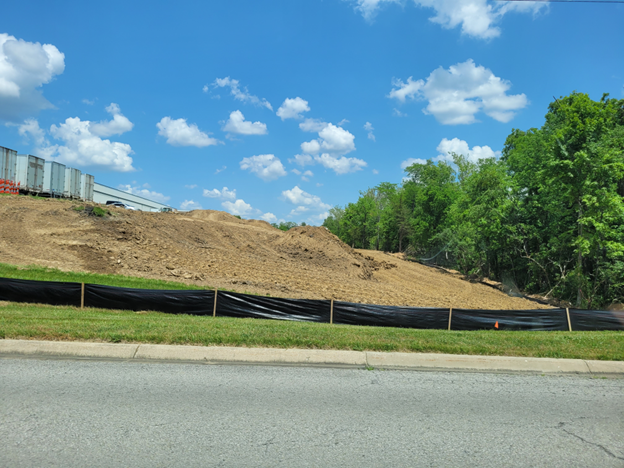 2. Inlet Protection or Curb Stop Damaged 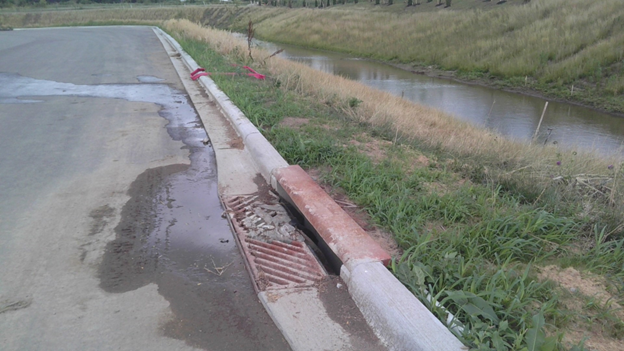 Fix Tips: If using a basket or dam style inlet protection, ensure that capture device is secured underneath grate to prevent getting pulled into catch basin or swept into roadway. For curb inlets, ensure that curb stops are installed along rear of the grate to ensure that water cannot enter through the sides or top of the inlet.
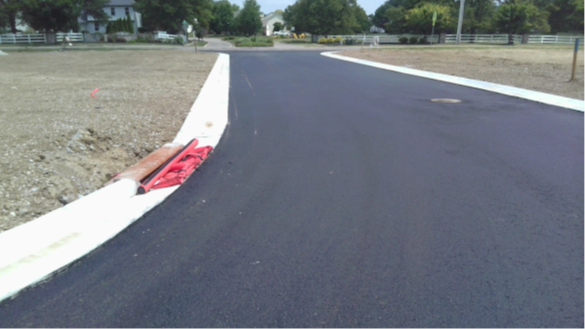
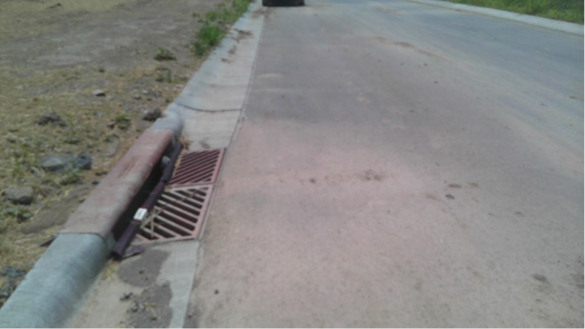
3. Compost Filter Socks Flattened / Moved 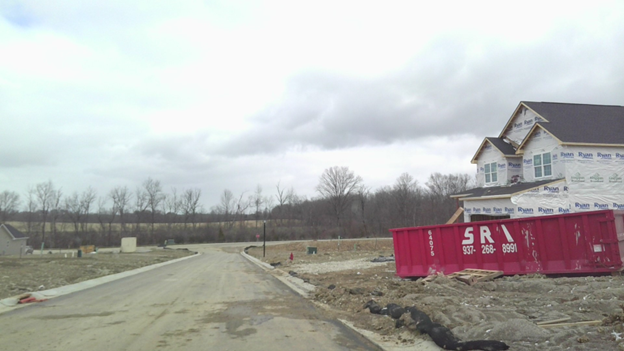 Fix Tips: Replace socks that have been torn or damaged beyond repair. If socks have just become flattened, refill with compost material until they are returned to the appropriate diameter. Encourage your team to use established construction entrances to prevent running over the socks. If the socks are moved for utility or other work on the lot, ensure that they are replaced in the appropriate location as soon as feasible. 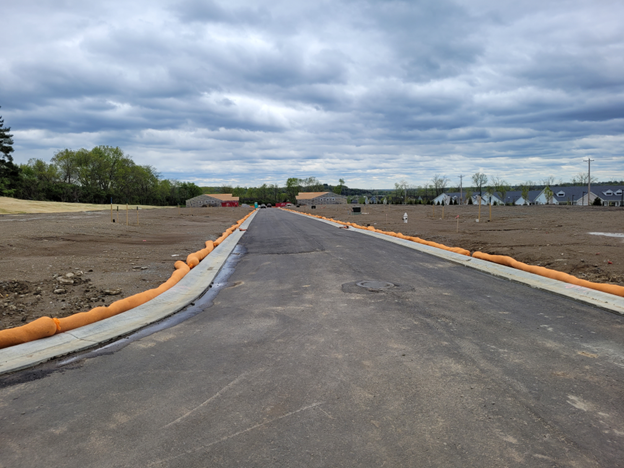 4. Sediment Build Up in Street 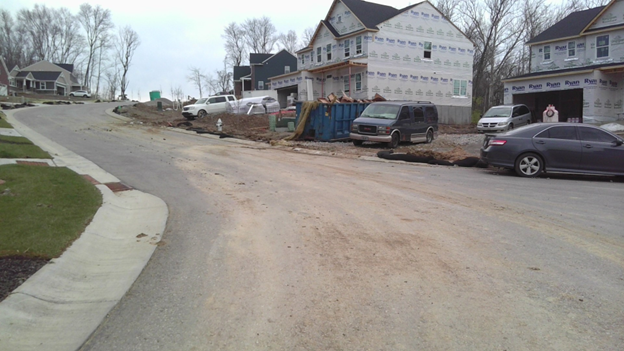 Fix Tips: Sweep the streets any time you notice a significant amount of tracking occurring. Establish a routine street sweeping schedule to prevent heavy accumulation on roadway. Ensure other practices (such as silt fence or filter socks, proper construction entrances) are in place and functioning to help stop sediment tracking in the first place. 5. Compost Filter Berms Blown Out 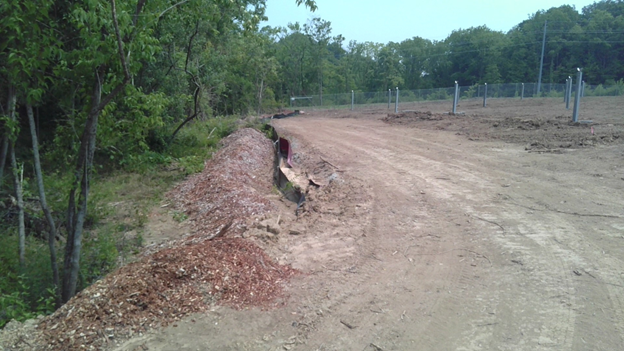 Fix Tips: If you notice sediment is overtopping the berms, the sediment may need to be dug out away from the berm area. It’s best practice to keep the sediment deposit level below ½ of the height of mulch berms or silt fence. If a heavy rainfall knocks down a portion of the berm, make sure that berms are built back up to meet the specifications outlined in the RWLD manual. 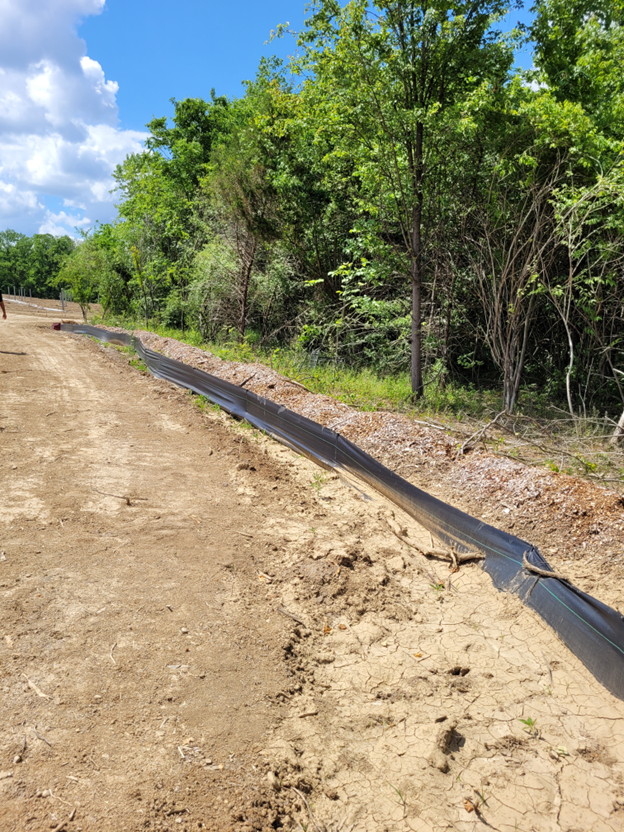 6. Maintain Construction Entrance 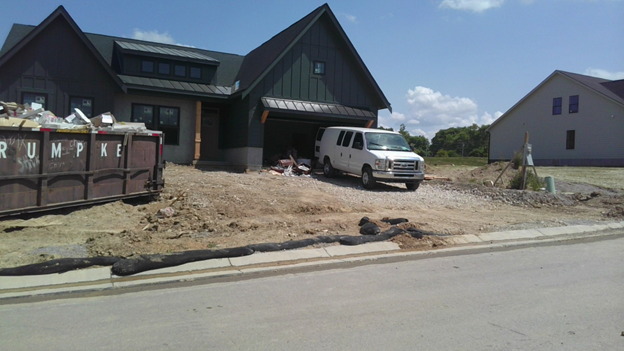 Fix Tips: ODOT 1/2s should be used for construction entrances. Smaller gravel tends to get swept into the roadway with sediment. If the incorrect aggregate is used, this will need to be revised to prevent off site tracking. If a construction entrance is regularly used, the aggregate may need to be replaced to provide ample area to kick sediment off wheels. 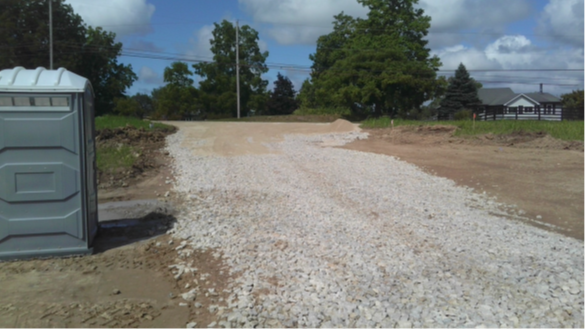 7. Concrete Washout Area Full / Needs Cleaned Up 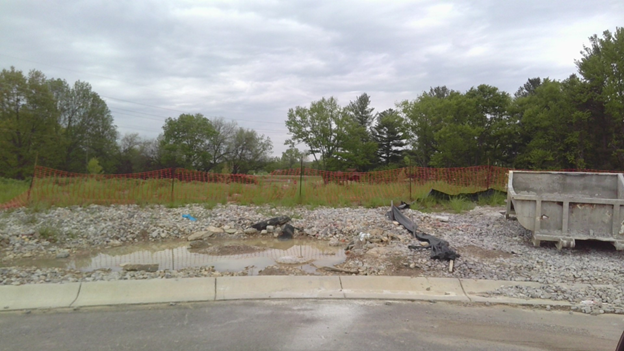 Fix Tips: Concrete washout pits should be emptied on a regular basis to prevent overflowing. If pits are dug out in the ground, they should be lined with a tarp to prevent leaching into bare soils. If the liner gets damaged or rolled up, it needs to be readjusted or replaced. The pit should have four walls around (typically lined straw bales). If the walls of the pit are compromised, they need to be rebuilt or replaced. 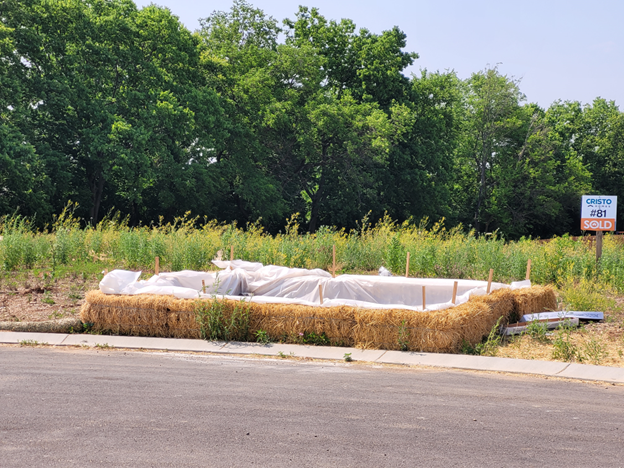 BMP Spotlight Example from the Field: |
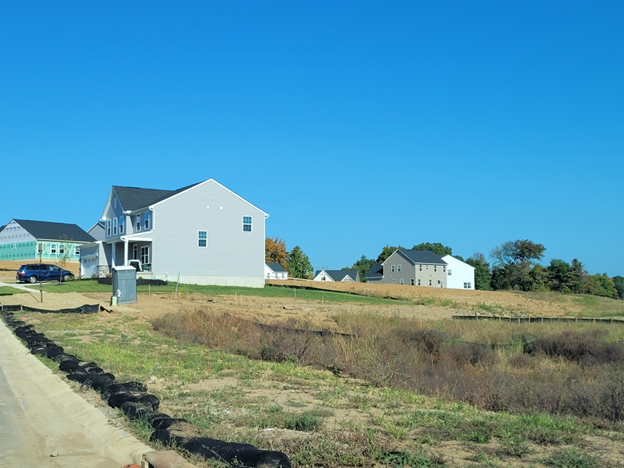 |  |
These are the results of staying on top of BMP maintenance!
Resources:
Rainwater and Land Development Manual:
https://epa.ohio.gov/divisions-and-offices/surface-water/guides-manuals/rainwater-and-land-development
Rainwater and Land Development Manual:
https://epa.ohio.gov/divisions-and-offices/surface-water/guides-manuals/rainwater-and-land-development
12 Comments
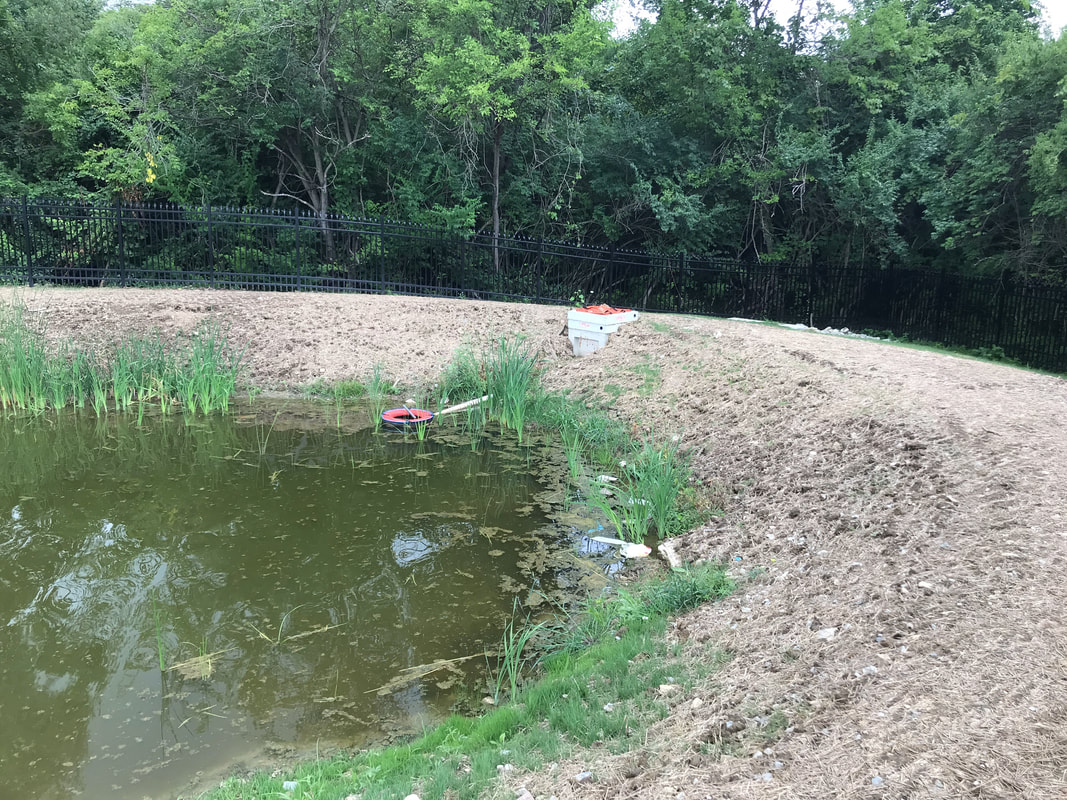
A skimmer device is a dewatering measure that secures to basin outlet structures during construction activity. There are several different available models that are accepted by the Ohio EPA. Some of the commonly used models include Erosion Supply and Company (ESC) Skimmer, Delaware Department of Transportation Skimmer, Faircloth Skimmer, Innovative Applied Solutions (IAS) Skimmer, and the Rymer Marlee Float Skimmer (pictured above).
What is the point of using a skimmer? Let’s start with the principle of sedimentation. Sedimentation is the process of sediment particles settling out of a fluid media and precipitating against a solid surface. Stormwater basins hold discharges to allow the suspended sediment to descend in the water column and settle on the floor of the basin.
What is the point of using a skimmer? Let’s start with the principle of sedimentation. Sedimentation is the process of sediment particles settling out of a fluid media and precipitating against a solid surface. Stormwater basins hold discharges to allow the suspended sediment to descend in the water column and settle on the floor of the basin.
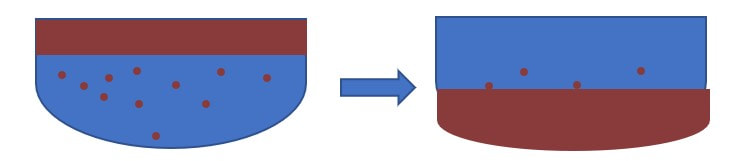
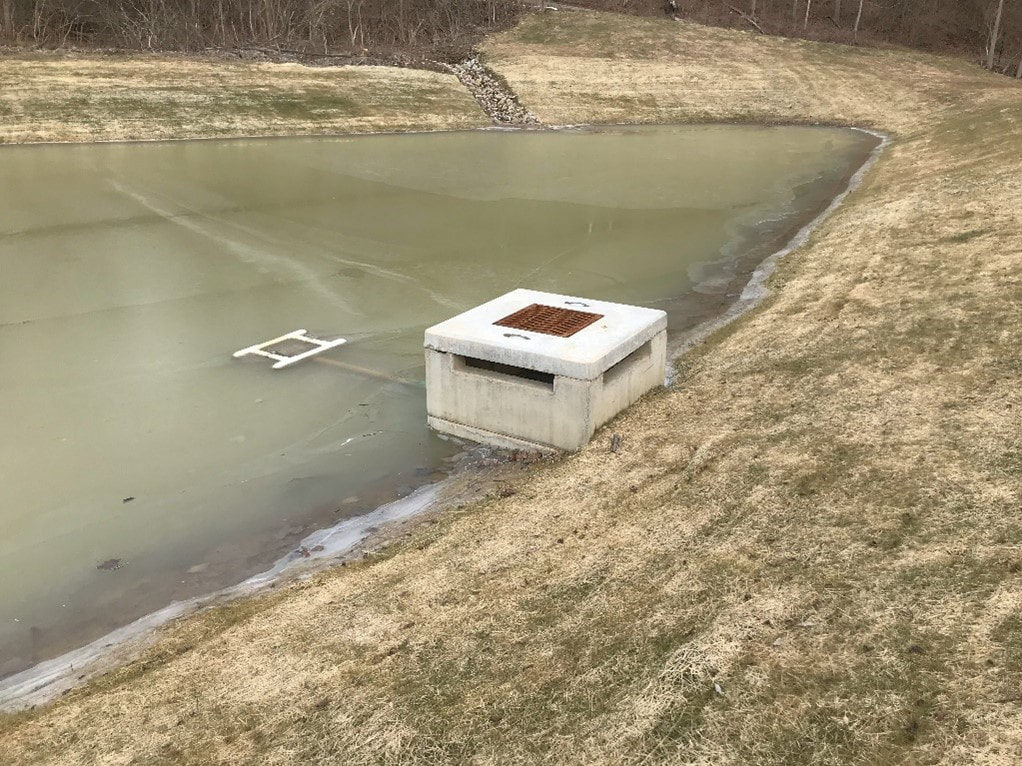
Multi-stage outlet structures are designed to accommodate different levels of water during different rainfall conditions and manage water quality post-construction. However, these structures are not designed to manage the excess sediment that can result from earth disturbance during construction.
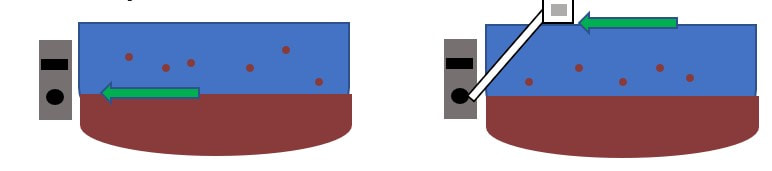
A skimmer structure connects to the outlet orifice and floats on the surface of the water.
When we revisit the concept of sedimentation, that means that the skimmer structure should be intaking the cleanest portion of the water column.This means that less sediment will be traveling through the outlet structure and pipes. This reduces the amount of built-up sediment that can occur in those structures and the amount of maintenance required post-construction. Additionally, this reduces the amount of water that is flowing from the basin directly into streams and other natural waterways.
Can’t I just put some rip rap at the basin outfall instead? While rip rap and rock check dams can certainly help to kick some sediment out of runoff, they are not intended to be used as sediment control measures, because a great amount of sediment can still infiltrate through the gaps in the aggregate. Rather, these controls are considered erosion control measures primarily designed to slow the velocity of water. Adding aggregate at the outfall will help to prevent erosion from the concentrated flow exiting the basin but will not replace the need for a skimmer.In addition, if you are not using a skimmer device on the basin and only using controls at the outfall, the basin is being dewatered from a more turbid portion of the water column rather than the cleaner water surface. Therefore, it would take even more work to filter out the sediment at the point of the outfall rather than at the source.Lastly, stormwater pollution prevention plans are specifically designed and engineered to dewater at these elevations and through these devices to meet permit requirements. When plans are not implemented as designed, it can not only present structural complications and present risk to other areas of the project, but it is also a direct violation of the environmental protection regulations in place to safeguard natural ecosystems.
How do you design a basin with an appropriate skimmer device?
When we revisit the concept of sedimentation, that means that the skimmer structure should be intaking the cleanest portion of the water column.This means that less sediment will be traveling through the outlet structure and pipes. This reduces the amount of built-up sediment that can occur in those structures and the amount of maintenance required post-construction. Additionally, this reduces the amount of water that is flowing from the basin directly into streams and other natural waterways.
Can’t I just put some rip rap at the basin outfall instead? While rip rap and rock check dams can certainly help to kick some sediment out of runoff, they are not intended to be used as sediment control measures, because a great amount of sediment can still infiltrate through the gaps in the aggregate. Rather, these controls are considered erosion control measures primarily designed to slow the velocity of water. Adding aggregate at the outfall will help to prevent erosion from the concentrated flow exiting the basin but will not replace the need for a skimmer.In addition, if you are not using a skimmer device on the basin and only using controls at the outfall, the basin is being dewatered from a more turbid portion of the water column rather than the cleaner water surface. Therefore, it would take even more work to filter out the sediment at the point of the outfall rather than at the source.Lastly, stormwater pollution prevention plans are specifically designed and engineered to dewater at these elevations and through these devices to meet permit requirements. When plans are not implemented as designed, it can not only present structural complications and present risk to other areas of the project, but it is also a direct violation of the environmental protection regulations in place to safeguard natural ecosystems.
How do you design a basin with an appropriate skimmer device?
There are several resources that can help with determining the appropriate skimmer for dewatering a basin. One of the best places to start is Ohio EPA’s sediment basin and dewatering compliance tool:https://epa.ohio.gov/static/Portals/35/storm/Sediment+Basin+Compliance+Tool+(Printer+Friendly).xlsx In case you are not familiar, this comprehensive spreadsheet not only helps to ensure that the sediment basins listed in the SWP3 meet the sediment storage and dewatering volume permit requirements, but it also helps to provide guidance and resources for skimmer orifice sizing and dewatering time compliance. Depending on the skimmer model, the spreadsheet will direct you to the manufacturer-specific calculator tools for a simple way to meet design standards.
How are skimmers installed and maintained?
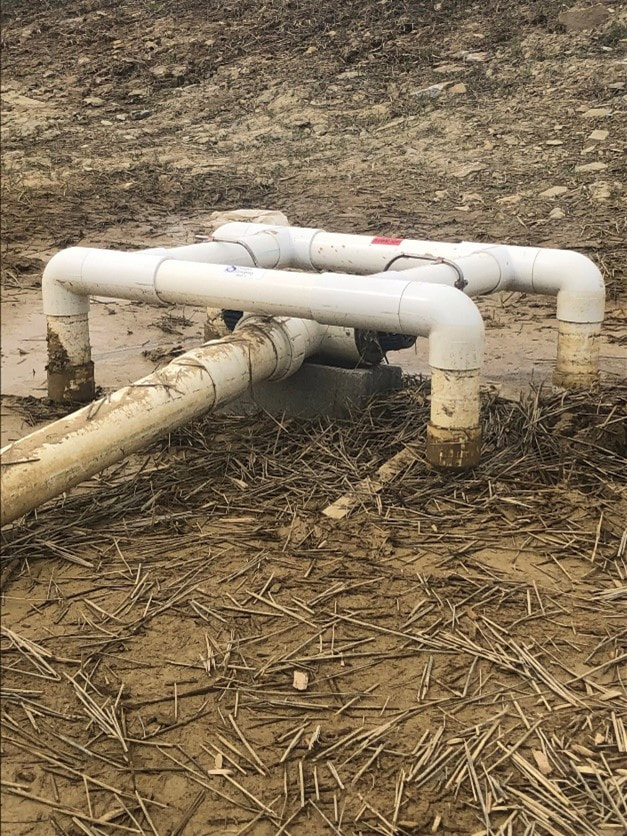
Installation will depend on the skimmer model and the basin outlet design. However, the skimmer will directly attach the orifice via a coupling. If the basin is a detention pond and has a lower-level water quality orifice that will have gravel and perforated pipe post construction, this will need to be closed off during construction to allow collected water to enter through the skimmer device instead. Maintenance of the skimmer is essential during construction. You will need to ensure that the skimmer stays properly attached to the outlet for the entire duration of the project. Skimmers may also get stuck on the floor of the basin during periods without rainfall. To prevent this from occurring, the skimmer can be elevated on a surface of aggregate, cinder blocks, or bricks. If the skimmer does not seem to be performing optimally, debris and built-up sediment may need to be periodically removed from the orifice plate and screen. Lastly, the area around the outlet and skimmer needs to be free of excess vegetation to prevent clogs and to prevent the skimmer from getting caught in the vegetation and becoming detached or elevated above the surface of the water.
Does the skimmer stay on forever? Nope! Once construction is complete and the entire project site is stabilized with vegetation, the skimmer device can be removed and replaced with the permanent outlet structure.
BMP Spotlight Example from the Field: Skimmers
Branson Staller and his team at SiteWORX have been working at Project Care in Mason, Ohio[BJA2] to construct a new Mercy Hospital facility. During routine inspections, we noticed their team’s prompt basin and skimmer device installation. Having the skimmer on the outlet from the get go has made for more efficient sediment management throughout the project.
Does the skimmer stay on forever? Nope! Once construction is complete and the entire project site is stabilized with vegetation, the skimmer device can be removed and replaced with the permanent outlet structure.
BMP Spotlight Example from the Field: Skimmers
Branson Staller and his team at SiteWORX have been working at Project Care in Mason, Ohio[BJA2] to construct a new Mercy Hospital facility. During routine inspections, we noticed their team’s prompt basin and skimmer device installation. Having the skimmer on the outlet from the get go has made for more efficient sediment management throughout the project.
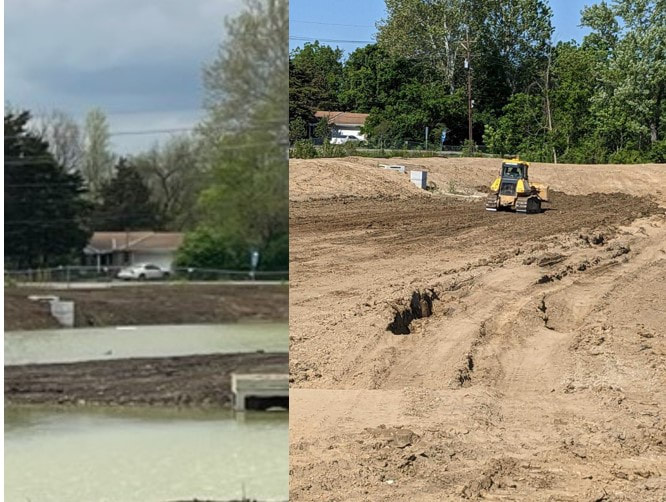
We interviewed SiteWORX about their committement to sediment and erosion control measures and how using a skimmer has helped with their project construction:
“SWPPP management is an ongoing process through the life of a construction project. Measures such as silt fence & temporary pond skimmers keep the site compliant and help protect the environment. Specifically, the skimmer works by floating at the surface of the water allowing clean water to drain & sediment and silt to settle to the bottom. The skimmer at Mercy Kings Mills has been vital in managing water levels in the micro pool through multiple design changes & regrading of the dry pond to get it to a finished product.”
This is a great example of a team taking the time to understand purpose of a sediment and erosion control measure and ensuring that it is in place to do its job right away.
Resources:
Rainwater and Land Development Manual:
https://epa.ohio.gov/divisions-and-offices/surface-water/guides-manuals/rainwater-and-land-development
Presentations from Hamilton County Conservation District’s Skimmer Workshop can be found here: https://www.hcswcd.org/skimmers.html
“SWPPP management is an ongoing process through the life of a construction project. Measures such as silt fence & temporary pond skimmers keep the site compliant and help protect the environment. Specifically, the skimmer works by floating at the surface of the water allowing clean water to drain & sediment and silt to settle to the bottom. The skimmer at Mercy Kings Mills has been vital in managing water levels in the micro pool through multiple design changes & regrading of the dry pond to get it to a finished product.”
This is a great example of a team taking the time to understand purpose of a sediment and erosion control measure and ensuring that it is in place to do its job right away.
Resources:
Rainwater and Land Development Manual:
https://epa.ohio.gov/divisions-and-offices/surface-water/guides-manuals/rainwater-and-land-development
Presentations from Hamilton County Conservation District’s Skimmer Workshop can be found here: https://www.hcswcd.org/skimmers.html
It’s here! The OHC000006 General Permit can be found on Ohio EPA’s website: https://epa.ohio.gov/divisions-and-offices/surface-water/permitting/storm-water-discharges-from-small-and-large-construction-activities--general-permit
RENEWAL PROCESS
If your site is currently covered under the previous iteration of the Construction General Permit (OHC000005), that coverage will be terminated 180 days after the effective date of the new permit (April 23, 2023) if you do not submit a renewal application. You can submit the renewal application through the Ohio EPA eBusiness Center here: https://ebiz.epa.ohio.gov/
Once you open your active permit(s) in STREAMS, you will click “Renewal” in the action drop down list as shown in the screen shot below to bring up the renewal application form.
RENEWAL PROCESS
If your site is currently covered under the previous iteration of the Construction General Permit (OHC000005), that coverage will be terminated 180 days after the effective date of the new permit (April 23, 2023) if you do not submit a renewal application. You can submit the renewal application through the Ohio EPA eBusiness Center here: https://ebiz.epa.ohio.gov/
Once you open your active permit(s) in STREAMS, you will click “Renewal” in the action drop down list as shown in the screen shot below to bring up the renewal application form.
If your project is complete and will not require renewed permit coverage, you need to submit a Notice of Termination (NOT) application form through Ohio EPA’s eBusiness Center by selecting “Terminate” in the dropdown list rather than “renewal”.
PERMIT UPDATES
One of the first (and obviously most important) changes to note in the OHC000006 permit is updating “stormwater” to one word instead of two. The Table of Contents was also updated and is now hyperlinked. Additional numbering has also been provided in longer sections to make navigation easier.
POST CONSTRUCTION RERQUIREMENTS
Extended Detention Requirements: An additional volume equal to 20% of the WQv must be incorporated into the BMP for sediment storage.
Infiltration Practices Requirements: The design infiltration rate values must be derived from site-specific measurements obtained through field tests of the in-situ soil for practices designed to infiltrate the WQv (table 4a and 4b).
Pedestrian Trails: Pedestrian trails may implement post-construction BMPs in compliance with the current version of the ODOT Location and Design Manual, Volume Two Drainage Design (Ohio EPA accepted alternative to conditions of the permit).
Redevelopment Projects (Encourages the redevelopment of areas that were not previously subjected to WQv). Must meet one or both criteria:
Alternative Post-Construction BMPs:
SEDIMENT BARRIERS
Language to clarify “tubular barriers” (i.e. filter sock, silt sock) are allowable practice and referenced in the Rainwater and Land Development Manual.
STREAM SETBACKS
Ohio EPA strongly recommends 50ft buffers to be maintained around surface water (including wetlands).
ELECTRONIC RECORD KEEPING
NOTICE OF TERMINATION REQUIREMENTS
Permit remains in effect until a signed Notice of Termination (NOT) form is submitted and permit coverage is terminated by the Ohio EPA.
BIG DARBY CREEK PERMIT (Does not Apply to Warren County)
OLENTANGY RIVER PERMIT (Does not Apply to Warren County)
Only jurisdictional ephemeral streams are subject to riparian setback requirements.
Extended Detention Requirements: An additional volume equal to 20% of the WQv must be incorporated into the BMP for sediment storage.
Infiltration Practices Requirements: The design infiltration rate values must be derived from site-specific measurements obtained through field tests of the in-situ soil for practices designed to infiltrate the WQv (table 4a and 4b).
Pedestrian Trails: Pedestrian trails may implement post-construction BMPs in compliance with the current version of the ODOT Location and Design Manual, Volume Two Drainage Design (Ohio EPA accepted alternative to conditions of the permit).
Redevelopment Projects (Encourages the redevelopment of areas that were not previously subjected to WQv). Must meet one or both criteria:
- A 20% net reduction of site’s volumetric runoff coefficient with soil restoration or the use of a green roof
- A portion of the site treated using a practice meeting Table 4a/4b criteria for which the WQv (see Equation 1) Alternative Post-Construction BMP
Alternative Post-Construction BMPs:
- All alternative post-construction BMPs require EPA approval and must fall within certain technical criteria outlined in the section:
- Practice must be capable of providing sustained, long-term stormwater treatment.
- The stormwater treatment efficiency must be equivalent to that in table 4a and 4b (includes laboratory, field testing).
- The discharge rate from the practice shall be reduced to prevent erosion and protect physical and biological stream integrity.
- New permit allows both pretreatment and primary practices to properly reference the BMP testing criteria and address changes to Washington TAPE and STEPP.
SEDIMENT BARRIERS
Language to clarify “tubular barriers” (i.e. filter sock, silt sock) are allowable practice and referenced in the Rainwater and Land Development Manual.
STREAM SETBACKS
Ohio EPA strongly recommends 50ft buffers to be maintained around surface water (including wetlands).
ELECTRONIC RECORD KEEPING
- Electronic records cannot be modified without digital audit trail.
- Modifications and people responsible for making modifications must be documented.
- Systems need to have clear instructions for users to ensure proper use.
- Electronic records (NOI, SWP3, coverage letter, and inspection reports) must be made readily available on-site (must be able to furnish immediately for authorized representatives).
NOTICE OF TERMINATION REQUIREMENTS
Permit remains in effect until a signed Notice of Termination (NOT) form is submitted and permit coverage is terminated by the Ohio EPA.
BIG DARBY CREEK PERMIT (Does not Apply to Warren County)
- New permit prioritizes infiltration practices to address WQv.
- An alternative discharge performance standard of 50 NTUs is provided for sediment ponds.
- Only jurisdictional ephemeral streams are subject to riparian setback requirements.
OLENTANGY RIVER PERMIT (Does not Apply to Warren County)
Only jurisdictional ephemeral streams are subject to riparian setback requirements.
Still have questions about the new permit and renewal process? Call Warren Co SWCD offices at (513) 695-1337 or check out further information on Ohio EPA’s website:
https://epa.ohio.gov/divisions-and-offices/surface-water/permitting/storm-water-discharges-from-small-and-large-construction-activities--general-permit
https://epa.ohio.gov/divisions-and-offices/surface-water/permitting/storm-water-discharges-from-small-and-large-construction-activities--general-permit
As defined by the Federal Environmental Protection Agency, Low Impact Development (LID) refers to a variety of practices designed to mimic natural drainage to manage stormwater flow. The overarching goal is to minimize the impact of development on the natural landscape and environment. In contrast to high impact development with mostly impervious surface and grey infrastructure, these practices encourage stormwater percolation into the soil. In addition to managing stormwater volume, this helps to filter out pollutants that may be picked up by stormwater as it makes its way to natural waterways.
What are the Benefits of LID?
Economic
Yes! In 2020, Warren County updated its stormwater regulations and technical design guide to allow for green infrastructure practices for water quality best management such as wetlands, permeable pavements, infiltration practices, and bioretention. Not only is low impact development permissible in the county, but with the numerous benefits, it is strongly encouraged!
What are the Benefits of LID?
Economic
- cut costs associated with traditional infrastructure materials (such as curb, pavement, basin outlet/inlet structures, pipe conveyance systems, culverts, etc.)
- reduce clearing/grading costs (less disturbance = less of this work)
- increase value of residential lots (larger lots with more green space/natural vegetation)
- reduce landscaping costs (working around the natural areas that are already available on-site)
- reduce pollutant loading to ground water and drinking source water (reduces water treatment process costs)
- reduce long-term life cycle costs
- provide habitat for local pollinators
- effective stormwater volume management to reduce stream channel erosion
- reduce downstream pollutant loading
- reduce urban heat island effect
- vegetation and flowers add aesthetic value to built landscapes
- education and recreational opportunities
- provide ecosystems that deter mosquito breeding and other pests
Yes! In 2020, Warren County updated its stormwater regulations and technical design guide to allow for green infrastructure practices for water quality best management such as wetlands, permeable pavements, infiltration practices, and bioretention. Not only is low impact development permissible in the county, but with the numerous benefits, it is strongly encouraged!
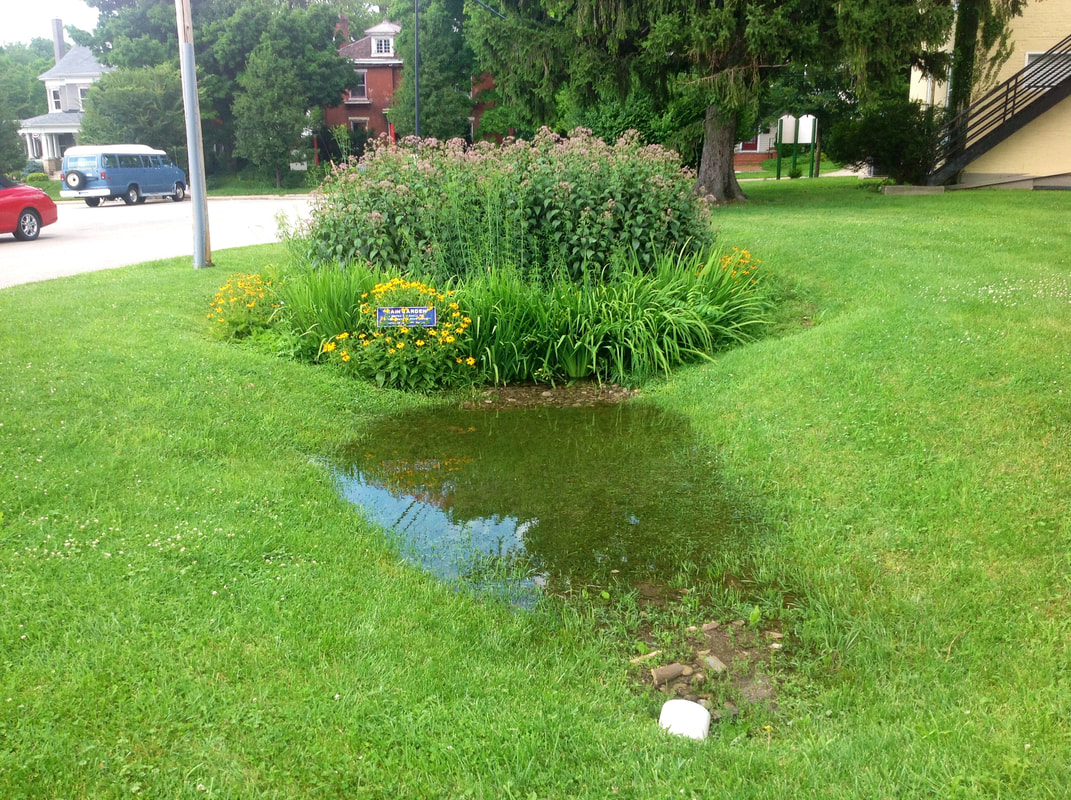 | BMP SPOTLIGHT: Rain Garden, Warren County Soil & Water Conservation District If you have ever visited our office in Lebanon, you may have noticed this little garden next to our parking lot. What you may not have noticed is that it is a garden is designed with stormwater management in mind. It helps collect and clean water runoff from our parking lot. Feel free to stop by if you’re in the area and take a look at green infrastructure and low impact development in action! |
Other examples of Green Infrastructure that can be used as part of a Low Impact Development plan can be found here: https://www.epa.gov/green-infrastructure/what-green-infrastructure
Additional Resources
www.warrenswcd.com/rain-gardens.html
https://www.epa.gov/nps/urban-runoff-low-impact-development
http://www.wceo.us/
Additional Resources
www.warrenswcd.com/rain-gardens.html
https://www.epa.gov/nps/urban-runoff-low-impact-development
http://www.wceo.us/
One of the requirements for stormwater pollution prevention plans (SWPPPs) is to include an implementation schedule for major construction operations. This includes things like clearing, grubbing, excavating, grading, utility installation, and other similar activities.
The Ohio EPA Rainwater and Land Development manual includes a table of what this general sequence should look like: https://epa.ohio.gov/static/Portals/35/storm/technical_assistance/6-24-09RLDCh8.pdf (pg 13)
There are steps that should be taken as early in the construction process as possible to avoid problems with sediment and erosion control later in the project.
The Ohio EPA Rainwater and Land Development manual includes a table of what this general sequence should look like: https://epa.ohio.gov/static/Portals/35/storm/technical_assistance/6-24-09RLDCh8.pdf (pg 13)
There are steps that should be taken as early in the construction process as possible to avoid problems with sediment and erosion control later in the project.
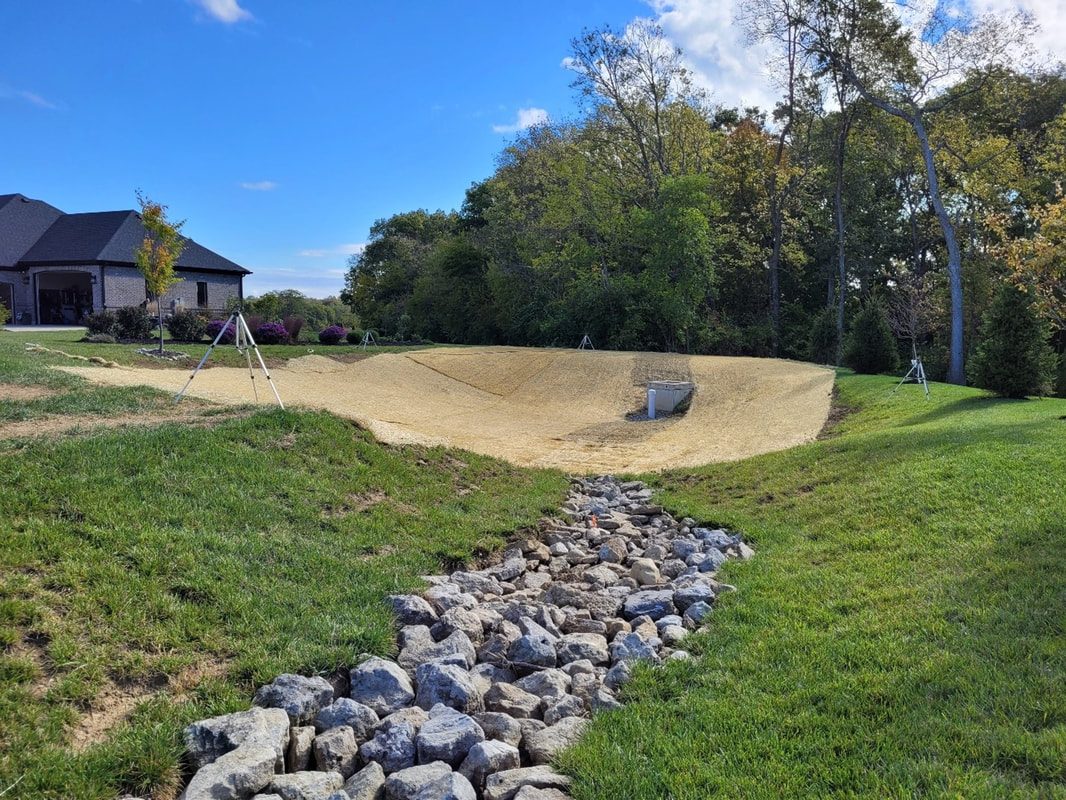
Let’s breakdown those crucial early steps:
- Protect your natural areas. As construction activity is commencing, everyone working on the site should be aware of protected forested areas, streams, and wetlands that should not be disturbed. These should be marked off with easily identifiable fencing. If areas that were meant to be left alone get impacted, it can cause harm to sensitive natural areas and may also be in violation of other state and federal permits.
- Construct an area where equipment and vehicles have a clean exit from the site. A proper construction entrance/exit should consist of ODOT #1/#2's aggregate over a geotextile base. The proper aggregate size helps to ensure there will be enough vibration under the tires to kick mud off equipment and vehicles before leaving the construction site. It is best to have this installed as soon equipment and trucks are moving on and off the site to prevent off-site tracking.
- Install perimeter controls around all areas planned for disturbance. Clearing trees (root ball and all), grubbing, and grading work results in exposed soils. That sediment must be contained on the construction site. Perimeter controls need to be up around the entire perimeter of disturbance to help intercept sediment-laden discharges from moving off-site during rain events.
- Construct temporary basins. Basin construction should be part of the initial phase of construction. Basins must be installed and functional before any upslope development. As soon as the basin is dug, apply temporary seeding treatment to ensure embankments are stabilized throughout construction. Doing this early in the process helps to prevent erosion in the basin and sediment storage problems. The basin outlet structure should also have a skimmer device installed as soon as possible for de-watering off the surface of the basin rather than lower depths of water where more sediment is present.
- Follow construction timeline for remaining controls. Other sediment and erosion controls should also be installed as soon as possible. For example, when streets are installed, a sweeping schedule should be established. As new catch basins or street inlets are installed, get inlet protection on them right away. As lot development begins, make sure individual lot controls are in place. When concrete pouring is in full swing, there should be a designated washout area with controls.
- Communicate with your SWPPP inspector! Keep your inspector in the loop when new phases of the project begin in between inspection periods. If there are changes to the timeline or problems with getting certain controls established, let your inspector know so that they can help provide guidance that can help to keep things on track.
Generally, the sooner these controls are implemented, the better the outcome for sediment and erosion management. It’s always better to work proactively rather than to have to fix problems that arise from waiting too long to implement or correct controls.
Phased Disturbance is another tool to keep in mind when developing SWPPPs and generating a construction sequence. This practice minimizes the amount of grading done at one time. Planning smaller earth moving efforts allows for parts of the site to remain undisturbed and stabilized while other parts are being actively worked. Planning disturbance in this way helps reduce the amount of sediment that controls manage at one time, which increases the effectiveness of these practices.
BMP Spotlight Example from the Field: Early Construction Process Communication and Implementation
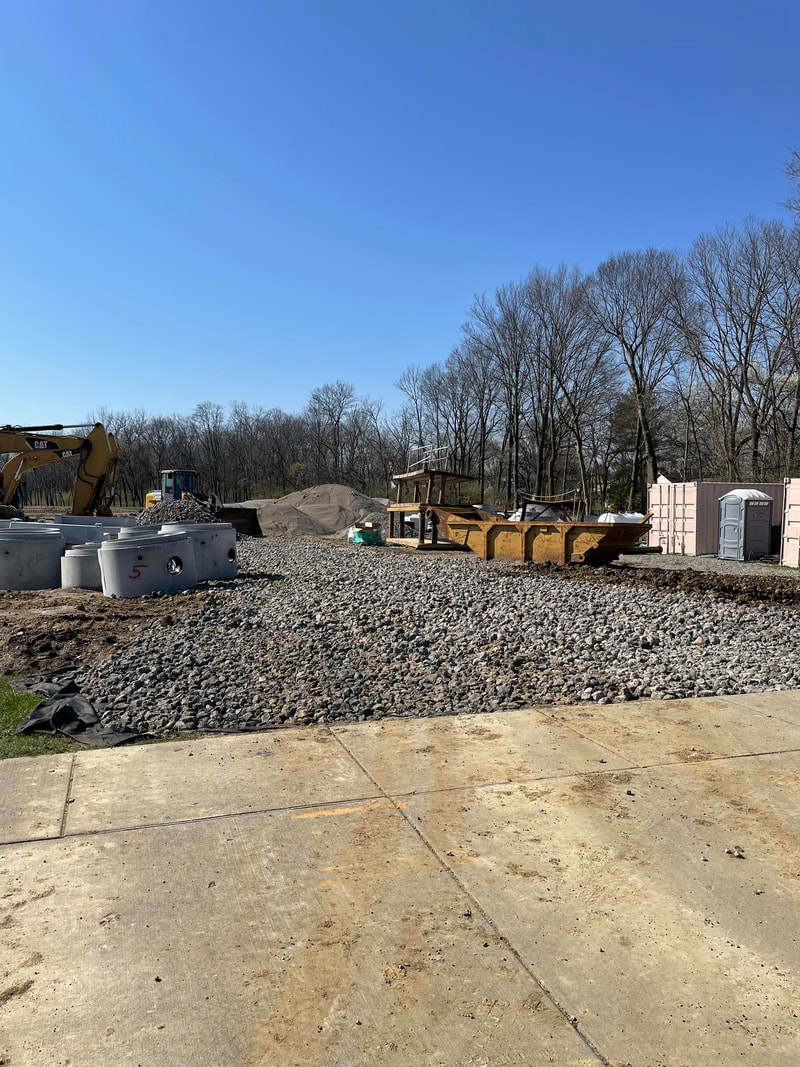
Monarch Homes and Diggit Excavating met with Warren Co SWCD at a pre-construction meeting with the City of Lebanon where the requirements and sequence of sediment and erosion controls measures were discussed. Since that meeting, the team has been in constant contact with Warren Co SWCD, proving updates on initial groundbreaking and the control installation timelineas well as any changes to controls being used on the construction site.
As soon as clearing and grading work was set to begin, there was a proper construction entrance in place and silt fence around the clearing boundaries that was supplemented with a mulch berm from the on-site clearing. The basin was dug as part of the first phase as well. The basin will be temporarily stabilized and have a skimmer installed on the outlet once installed.
We asked our friends at Diggit Excavating for their take on how communication has helped with the development process from their perspective:
As soon as clearing and grading work was set to begin, there was a proper construction entrance in place and silt fence around the clearing boundaries that was supplemented with a mulch berm from the on-site clearing. The basin was dug as part of the first phase as well. The basin will be temporarily stabilized and have a skimmer installed on the outlet once installed.
We asked our friends at Diggit Excavating for their take on how communication has helped with the development process from their perspective:
 | “At Diggit Excavating we strive to minimize the impact our work has on the surrounding environment. The relationship between community, agency, and contractor is something we take seriously and work hard to cultivate and maintain. Everything as designed on paper is not always perfect in the field but, with proper communication, we can work through any situation to develop practical and real work solutions that help maintain environmental controls. One way we like to accomplish this is by meeting with the agency up front to discuss the project and its environmental requirements to identify specific site constraints and other potential issues before they arise. Warren County has always been very accommodating and great to work with in this regard. Both parties appreciate and encourage this kind of involvement.” |
This is a great example of communication between our agency and developers and contractors on projects and how compliance can begin right out of the gate as a new project begins. This proactive approach helps to avoid many complications later in the construction process.
As it can sometimes be difficult to translate technical regulations into feasible solutions in the “real world” on-site, we decided to spotlight some practices with examples we've found while conducting our inspections.
This month we noticed some great Best Management Practices in Hamilton Township on the Valley View Subdivision site. Everyone that enters the site is greeted by a large-format blue sign at the main construction entrance outlining site safety and erosion control rules, so it's easy for everyone to reference at a moment's notice. There is also a great example of a SWPPP storage box containing the SWPPP and keeping it accessible while safe from the elements. Aaron Smith with DR Horton provided some insight into how the stormwater team approaches stormwater runoff on the construction site:
This month we noticed some great Best Management Practices in Hamilton Township on the Valley View Subdivision site. Everyone that enters the site is greeted by a large-format blue sign at the main construction entrance outlining site safety and erosion control rules, so it's easy for everyone to reference at a moment's notice. There is also a great example of a SWPPP storage box containing the SWPPP and keeping it accessible while safe from the elements. Aaron Smith with DR Horton provided some insight into how the stormwater team approaches stormwater runoff on the construction site:
“D.R. Horton is strongly committed to protecting the environment in every community in which we construct and sell homes. Each employee has an obligation to act, and to ensure that our subcontractors act, in an environmentally responsible manner. The Valley View subdivision has been a prime example of the effectiveness of this strategy which cannot be successfully implemented without the division stormwater compliance representative, site stormwater compliance representatives, and our trade partners and vendors working together to achieve compliance with environmental rules and regulations.
We at D.R. Horton greatly appreciate the recognition of our stormwater program and it cannot work without our on-site superintendents, area managers, and land development project managers who help to manage daily stormwater compliance on our sites. At D.R. Horton stormwater is a team effort starting at the Corporate level trickling down to our specific Divisions, and everyone working together towards this goal helps to develop an effective program.”
We at D.R. Horton greatly appreciate the recognition of our stormwater program and it cannot work without our on-site superintendents, area managers, and land development project managers who help to manage daily stormwater compliance on our sites. At D.R. Horton stormwater is a team effort starting at the Corporate level trickling down to our specific Divisions, and everyone working together towards this goal helps to develop an effective program.”
| It's always great to see feedback from inspection reports and maintenance needs being taken care of so efficiently. Stay tuned for more BMP tips and examples in future editions of Development Digest! | 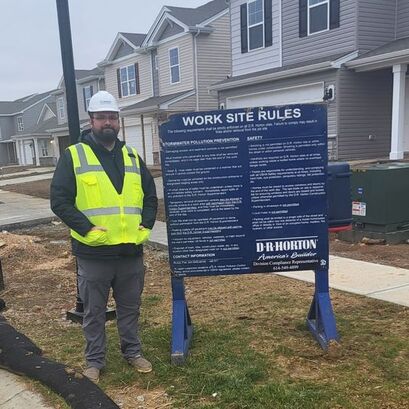 Aaron Smith of DR Horton at the Valley View Subdivision, photo courtesy of Aaron Smith |
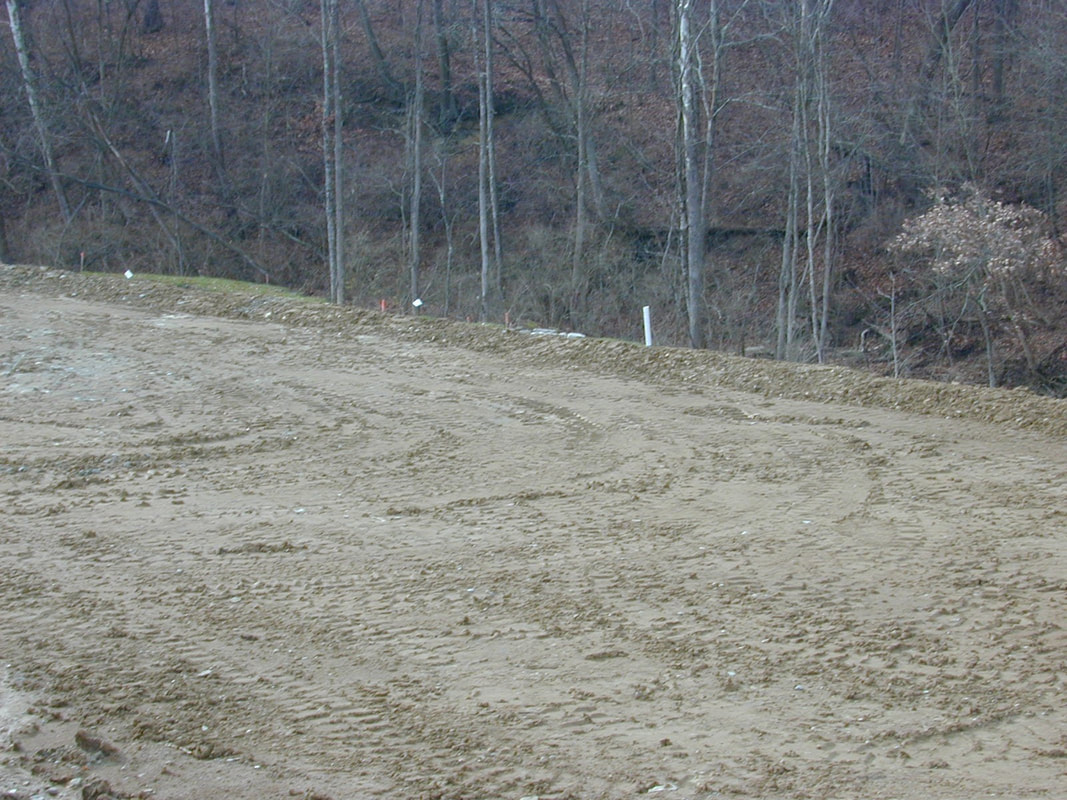
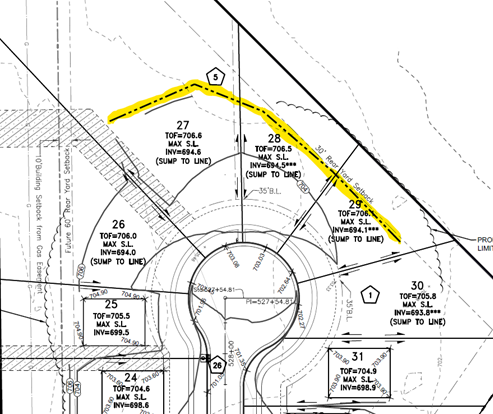
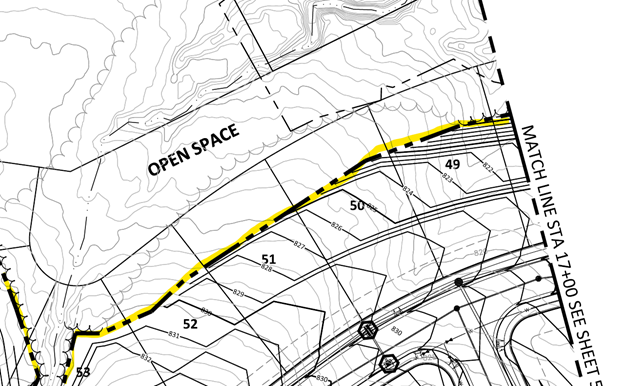
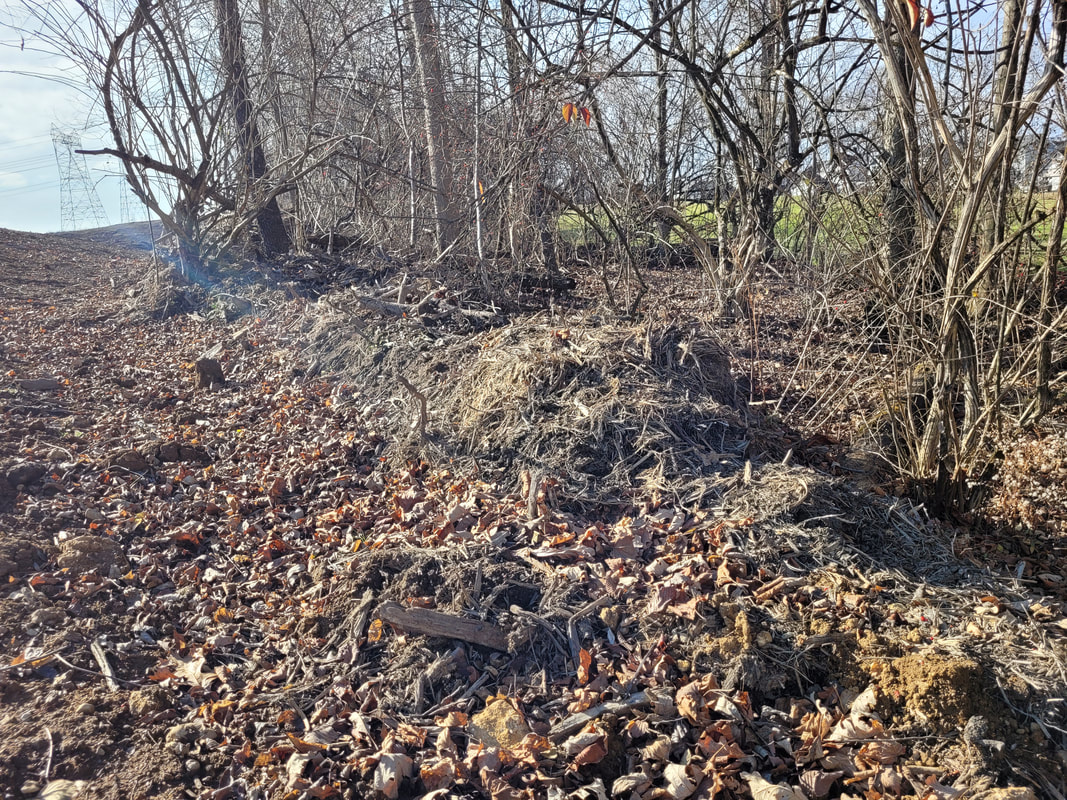
If you work in land development and construction, you are likely familiar with silt fence. When installed and maintained properly, silt fence is an effective sediment control measure. It is also one of the most common perimeter control measures noted on Stormwater Pollution Prevention Plans in Warren County. However, there is another type of perimeter protection that is becoming increasingly popular and may be a great accessible supplement or even alternative to silt fence: mulch filter berms. Rather than capturing runoff to allow for sediment settling like silt fence, mulch berms filter out sediment as water passes through the berm.
 | What are the benefits of filter berms? Mulch filter berms are an Ohio Environmental Protection Agency-approved practice for sediment control. Mulch berms can be lower in cost if materials are already available and often require less maintenance than alternative perimeter control practices. Berms can also give debris from tree clearing a new purpose on-site rather than having to be hauled off-site for disposal. After the project is completed, the berms can typically be spread over the site, which ends up generating less waste than other control practices as well. |
Can I have filter berms listed on my SWPPP?
Yes! Please do include them on your SWPPP if that is the plan. They are approved and encouraged by our office for use if a project plans to do extensive tree clearing work. Often silt fence is listed by default on the SWPPP and mulch berms are ultimately used during construction due to their benefits. Best practice is to have the perimeter control that is meant to be used written on the plan. However, if things do change as work commences, reach out to your designated SWPPP inspector to make sure the updates are documented on the plan moving forward.
Yes! Please do include them on your SWPPP if that is the plan. They are approved and encouraged by our office for use if a project plans to do extensive tree clearing work. Often silt fence is listed by default on the SWPPP and mulch berms are ultimately used during construction due to their benefits. Best practice is to have the perimeter control that is meant to be used written on the plan. However, if things do change as work commences, reach out to your designated SWPPP inspector to make sure the updates are documented on the plan moving forward.
 |   |
What material can be used?
The Ohio Environmental Protection Agency’s Rainwater and Land Development Manual outlines the specifications for the materials that should be used for these filter berms. The guide specifically states compost used for filter berms shall be weed, pathogen, and insect free and derived from a well-decomposed source of organic matter. This material can include compost, mulch, or wood chippings. For projects that involve extensive tree clearing, we recommend considering mulch berms as a perimeter control practice. For the least amount of land disturbance, your site may even be able to avoid removing the entire root ball of the trees and mulch the stumps for filter berm material. If you have questions about using the material you have on-site for controls, contact the urban team at Warren County Soil and Water Conservation District.
The Ohio Environmental Protection Agency’s Rainwater and Land Development Manual outlines the specifications for the materials that should be used for these filter berms. The guide specifically states compost used for filter berms shall be weed, pathogen, and insect free and derived from a well-decomposed source of organic matter. This material can include compost, mulch, or wood chippings. For projects that involve extensive tree clearing, we recommend considering mulch berms as a perimeter control practice. For the least amount of land disturbance, your site may even be able to avoid removing the entire root ball of the trees and mulch the stumps for filter berm material. If you have questions about using the material you have on-site for controls, contact the urban team at Warren County Soil and Water Conservation District.
How are filter berms installed?
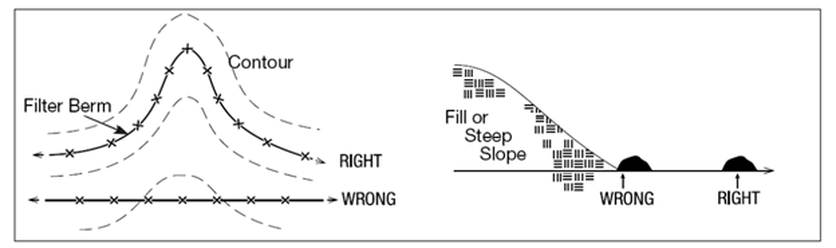
Filter berms are installed in the same location that silt fence would be installed: along the contour and away from the toe of a slope. Like silt fence, there are different specifications for spacing based on the percent slope as well. For silt fence, there are very specific installation steps that must be satisfied to ensure proper function. Mulch berms installation is a less labor-intensive process. Rather than trenching, placing, and stretching fencing to be completely taught, berms just need to be built up to achieve the specified measurements (minimum 1’ height and minimum 2’ wide or 2 times the height).
Filter berms are installed in the same location that silt fence would be installed: along the contour and away from the toe of a slope. Like silt fence, there are different specifications for spacing based on the percent slope as well. For silt fence, there are very specific installation steps that must be satisfied to ensure proper function. Mulch berms installation is a less labor-intensive process. Rather than trenching, placing, and stretching fencing to be completely taught, berms just need to be built up to achieve the specified measurements (minimum 1’ height and minimum 2’ wide or 2 times the height).
What kind of maintenance do filter berms require?
The most common filter berm maintenance need is to rebuild the berm to meet the appropriate specifications as needed. Like silt fence, built up sediment should be removed from behind the berm if it reaches over 1/3 the height of the berm. If a berm is completely washed out by a large storm event, the berm material will need to be replaced as well. If wash out continues to occur, additional or alternative controls may be needed, such as a rock check dam, or the size of the berm may need to be modified.
The most common filter berm maintenance need is to rebuild the berm to meet the appropriate specifications as needed. Like silt fence, built up sediment should be removed from behind the berm if it reaches over 1/3 the height of the berm. If a berm is completely washed out by a large storm event, the berm material will need to be replaced as well. If wash out continues to occur, additional or alternative controls may be needed, such as a rock check dam, or the size of the berm may need to be modified.
Where can I find additional information?
The Ohio EPA Rainwater and Land Development Manual Chapter 6: Sediment Controls contains a section on filter berms. You can also reach out to Warren Co SWCD's Urban Team to discuss a plan for implementing mulch berms in your current or future projects.
Rainwater and Land Development Manual:
https://epa.ohio.gov/divisions-and-offices/surface-water/guides-manuals/rainwater-and-land-development
Federal EPA:
https://www.epa.gov/system/files/documents/2021-11/bmp-compost-filter-berms.pdf
Warren County SWCD:
https://www.warrenswcd.com/
The Ohio EPA Rainwater and Land Development Manual Chapter 6: Sediment Controls contains a section on filter berms. You can also reach out to Warren Co SWCD's Urban Team to discuss a plan for implementing mulch berms in your current or future projects.
Rainwater and Land Development Manual:
https://epa.ohio.gov/divisions-and-offices/surface-water/guides-manuals/rainwater-and-land-development
Federal EPA:
https://www.epa.gov/system/files/documents/2021-11/bmp-compost-filter-berms.pdf
Warren County SWCD:
https://www.warrenswcd.com/
Winter is upon us, and that means it’s time to ensure your project site is ready for the weather to come.
Refresher: In case you haven’t seen it, we have a blog post that goes over helpful general information for site winterization here.
Training Opportunity: There is a free training webinar on site winterization available through StormwaterOne here.
When ice and snow melts and warm weather in the spring brings heavy rain, bare soils on construction sites are subject to erosion. As a result, sediment-laden runoff can enter storm systems and natural waterways if proper precautions are not taken. One of the best lines of defense for keeping soils in place is stabilization through temporary or permanent seeding. Yes, you can (and should!) stabilize idle sites (not going to be worked for >14 days) and sites that reach final grade in winter.
Refresher: In case you haven’t seen it, we have a blog post that goes over helpful general information for site winterization here.
Training Opportunity: There is a free training webinar on site winterization available through StormwaterOne here.
When ice and snow melts and warm weather in the spring brings heavy rain, bare soils on construction sites are subject to erosion. As a result, sediment-laden runoff can enter storm systems and natural waterways if proper precautions are not taken. One of the best lines of defense for keeping soils in place is stabilization through temporary or permanent seeding. Yes, you can (and should!) stabilize idle sites (not going to be worked for >14 days) and sites that reach final grade in winter.
WHAT IS THE TIMELINE FOR DIFFERENT TYPES OF SEEDING?
 photo credit: Alekon pictures via Unsplashed
 March 1st-August 15th: Oats, Tall Fescue, Annual Ryegrass, Perennial Ryegrass, Creeping Red Fescue, Kentucky Bluegrass*
August 16th-November 1st: Rye, Tall Fescue, Annual Ryegrass, Perennial Ryegrass, Creeping Red Fescue, Kentucky Bluegrass, Wheat*
Note: It is advised that seedings should not be made from October 1 through November 20. During this period, the seeds are likely to germinate but probably will not be able to survive the winter. For dormant seeding, it is advised to wait until temperatures consistently stay below 50 degrees F to prevent early germination. Temporary seeding/mulching techniques can be used until the dormant seeding window.
*Other approved species can be substituted
November 1st-February 29th: Mulching/temporary stabilization until temperatures consistently stay below 50 degrees F when dormant seeding can be implemented as a permanent solution.
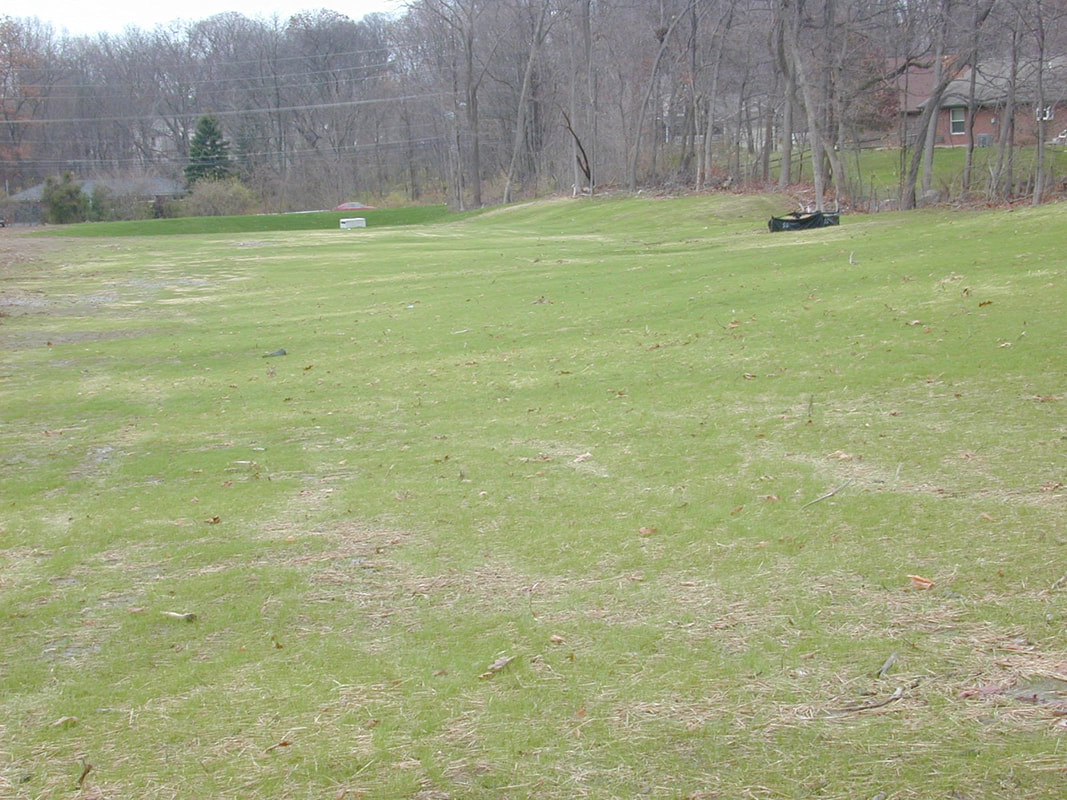
This means if you are reading this article in November 2022, you have missed the normal growing season. Therefore, if your site has not been stabilized, you’re down to two options: mulching for temporary stabilization or dormant seeding for a permanent solution if areas have achieved final grade.
August 16th-November 1st: Rye, Tall Fescue, Annual Ryegrass, Perennial Ryegrass, Creeping Red Fescue, Kentucky Bluegrass, Wheat*
Note: It is advised that seedings should not be made from October 1 through November 20. During this period, the seeds are likely to germinate but probably will not be able to survive the winter. For dormant seeding, it is advised to wait until temperatures consistently stay below 50 degrees F to prevent early germination. Temporary seeding/mulching techniques can be used until the dormant seeding window.
*Other approved species can be substituted
November 1st-February 29th: Mulching/temporary stabilization until temperatures consistently stay below 50 degrees F when dormant seeding can be implemented as a permanent solution.
This means if you are reading this article in November 2022, you have missed the normal growing season. Therefore, if your site has not been stabilized, you’re down to two options: mulching for temporary stabilization or dormant seeding for a permanent solution if areas have achieved final grade.
 |  |
WHAT EXACTLY IS DORMANT SEEDING?
With this practice, the seeds will freeze and remain dormant during winter weather conditions. Then as spring weather emerges, the seeds will thaw and begin to germinate. This cycle follows what happens to seeds naturally during this time of year. This practice works great for the bare, exposed soil conditions that are often present at project sites that have recently achieved final grade.
With this practice, the seeds will freeze and remain dormant during winter weather conditions. Then as spring weather emerges, the seeds will thaw and begin to germinate. This cycle follows what happens to seeds naturally during this time of year. This practice works great for the bare, exposed soil conditions that are often present at project sites that have recently achieved final grade.
HOW IS DORMANT SEEDING DONE?
Step 1 – Pick Your Seed
The timeline above outlines seeding practices in the Rainwater and Land Development Manual specifically for stabilizing construction sites for commercial, industrial, and/or residential purposes and at different times of the year. The USDA Natural Resources Conservation Service also provides a seeding table that outlines the grasses and legumes suitable for different uses and provides formulas for calculating seeding rates. This table can be found in the Ohio Field Office Technical Guide (FOTG) located here.
Step 2 – Prep
When soil conditions allow, prepare the seedbed, apply required amounts of lime and fertilizer.
Step 3 – Seed
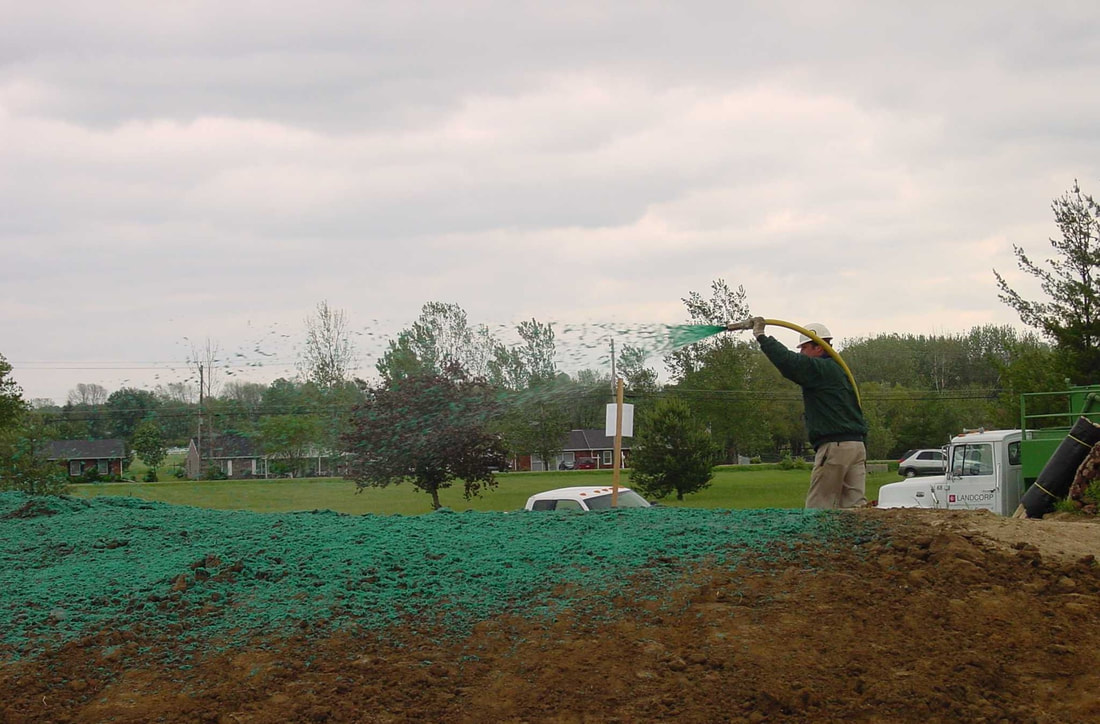
Within the appropriate timeframe outlined above, apply seed mixture with cyclone seeder, drill, cultipackers seeder, or hydro-seeder.
Step 4 -- Mulch
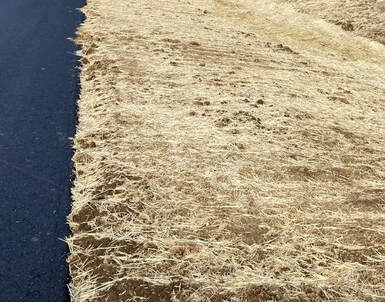
Mulch and anchor immediately after seeding. Acceptable mulch materials include straw, hydroseed, or erosion control matting/blankets.
Step 1 – Pick Your Seed
The timeline above outlines seeding practices in the Rainwater and Land Development Manual specifically for stabilizing construction sites for commercial, industrial, and/or residential purposes and at different times of the year. The USDA Natural Resources Conservation Service also provides a seeding table that outlines the grasses and legumes suitable for different uses and provides formulas for calculating seeding rates. This table can be found in the Ohio Field Office Technical Guide (FOTG) located here.
Step 2 – Prep
When soil conditions allow, prepare the seedbed, apply required amounts of lime and fertilizer.
Step 3 – Seed
Within the appropriate timeframe outlined above, apply seed mixture with cyclone seeder, drill, cultipackers seeder, or hydro-seeder.
Step 4 -- Mulch
Mulch and anchor immediately after seeding. Acceptable mulch materials include straw, hydroseed, or erosion control matting/blankets.
ADDITIONAL INFORMATION
If you aren’t sure what stabilization practices will work best for your site during winter months, our team at Warren County Soil and Water Conservation District is happy to help. Feel free to give us a call at (513)695-1337.
ADDITIONAL RESOURCES:
Rainwater and Land Development Manual
Ohio EPA NPDES General Construction Permit
Natural Resources Conservation Service
If you aren’t sure what stabilization practices will work best for your site during winter months, our team at Warren County Soil and Water Conservation District is happy to help. Feel free to give us a call at (513)695-1337.
ADDITIONAL RESOURCES:
Rainwater and Land Development Manual
Ohio EPA NPDES General Construction Permit
Natural Resources Conservation Service
Our urban team at Warren Co SWCD conducts routine sediment and erosion control inspections on active construction sites in Warren County. During these inspections and through collaboration with other surrounding soil and water districts, we have developed a list of common compliance issues with the Ohio EPA Construction General Permit regulations that can be fixed with a couple of easy steps:
1) Copy of the Current SWPPP + Construction Activity Log On-Site
To make sure our inspectors are looking for the most up-to-date sediment and erosion control features on-site and to ensure that run-off from the current site conditions is accounted for, it is required that a copy of the most up-to-date Stormwater Pollution Prevention Plan is available on-site.
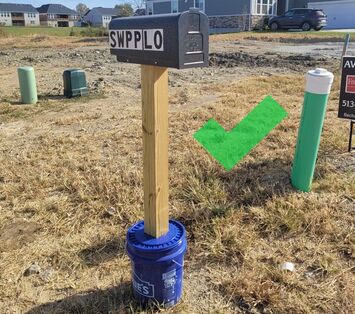
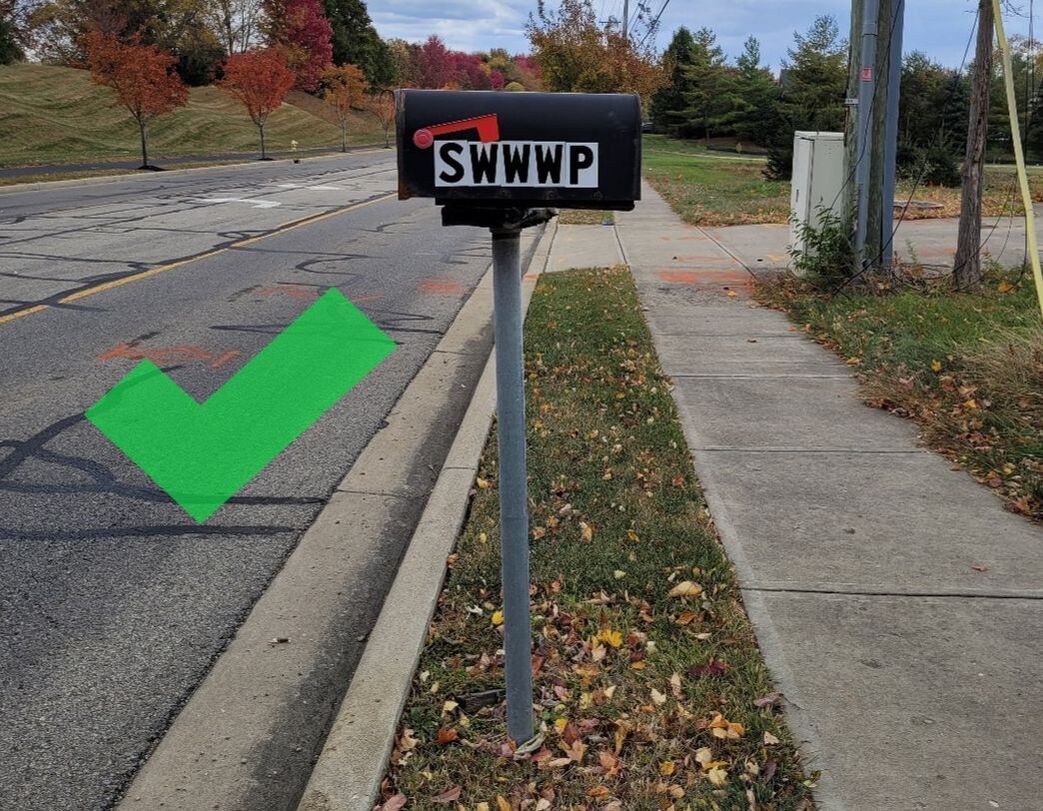
EASY FIX: Keep in touch with your local inspector to make sure that changes to the sediment and erosion plans are documented on the SWPPP. Keep a copy of this plan and construction activity logs in a construction trailer on-site or in a mailbox in residential developments. A great portable option is to anchor a mailbox in a concrete-filled bucket that can be moved with you to the next job site. Be sure to let inspectors know where these plans are going to be kept throughout the construction process.
To make sure our inspectors are looking for the most up-to-date sediment and erosion control features on-site and to ensure that run-off from the current site conditions is accounted for, it is required that a copy of the most up-to-date Stormwater Pollution Prevention Plan is available on-site.
EASY FIX: Keep in touch with your local inspector to make sure that changes to the sediment and erosion plans are documented on the SWPPP. Keep a copy of this plan and construction activity logs in a construction trailer on-site or in a mailbox in residential developments. A great portable option is to anchor a mailbox in a concrete-filled bucket that can be moved with you to the next job site. Be sure to let inspectors know where these plans are going to be kept throughout the construction process.
 |  |
2) Dumpster Covers
Construction site dumpsters can contain a variety of waste materials. Some of these, such as paints, adhesives, plasters, etc. can be harmful to natural environments if they enter waterways through storm systems. While most sites have dumpsters on-site, one of the commonly missed sediment and erosion control measures is a dumpster lid.
EASY FIX: Covering dumpsters with a lid or tarp prevents rainwater from entering the waste bin and carrying out pollutants through openings in the bottom of the container.
Construction site dumpsters can contain a variety of waste materials. Some of these, such as paints, adhesives, plasters, etc. can be harmful to natural environments if they enter waterways through storm systems. While most sites have dumpsters on-site, one of the commonly missed sediment and erosion control measures is a dumpster lid.
EASY FIX: Covering dumpsters with a lid or tarp prevents rainwater from entering the waste bin and carrying out pollutants through openings in the bottom of the container.
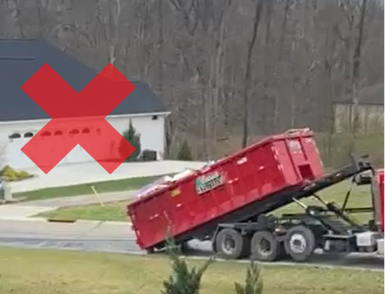 | 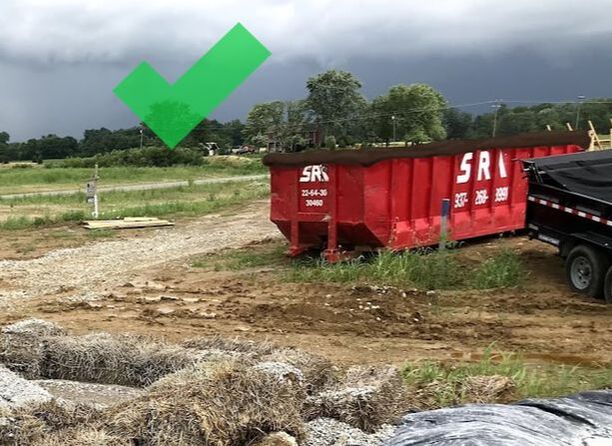 |
3) Porta-Potties Located Away from Storm Drains
Access to restrooms on-site is essential, but if waste from the facility leaches from the containment and gets carried into the storm system it can end up in our creeks and lakes. This not only poses a public health threat, it also introduces excess nutrients and hazards to aquatic ecosystems.
EASY FIX: If possible, place porta potties away from direct storm drain entryways where leachate would be able to soak into the ground prior to getting washed into roadways, storm conveyance systems, or waterways.
Access to restrooms on-site is essential, but if waste from the facility leaches from the containment and gets carried into the storm system it can end up in our creeks and lakes. This not only poses a public health threat, it also introduces excess nutrients and hazards to aquatic ecosystems.
EASY FIX: If possible, place porta potties away from direct storm drain entryways where leachate would be able to soak into the ground prior to getting washed into roadways, storm conveyance systems, or waterways.
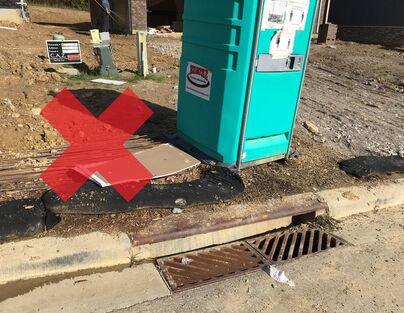 | 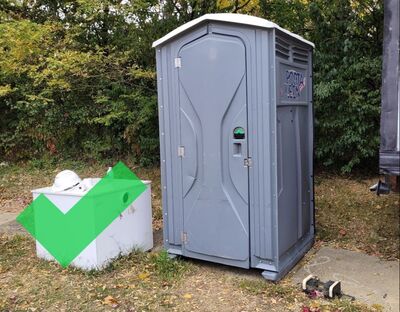 |
4) Proper Concrete Slurry Containment Concrete slurry containment is important to prevent clogging storm systems and preventing these materials from getting into waterways where they can harm wildlife.
EASY FIX: The Construction General Permit outlines the proper specifications for a concrete washout pit, which should be designed with 4 walls for complete containment and a liner to prevent these materials from leaching into the ground. If the site makes it difficult for trucks to wash into the bins at ground level, the ground can be dug out to provide a deeper bin. If it is not possible for pump trucks to fold up and properly wash out at these sites, there should be designated areas for this activity to take place on lots with liner on the ground, surrounding controls to prevent run off, and the waste should be dug out and taken off site.
EASY FIX: The Construction General Permit outlines the proper specifications for a concrete washout pit, which should be designed with 4 walls for complete containment and a liner to prevent these materials from leaching into the ground. If the site makes it difficult for trucks to wash into the bins at ground level, the ground can be dug out to provide a deeper bin. If it is not possible for pump trucks to fold up and properly wash out at these sites, there should be designated areas for this activity to take place on lots with liner on the ground, surrounding controls to prevent run off, and the waste should be dug out and taken off site.
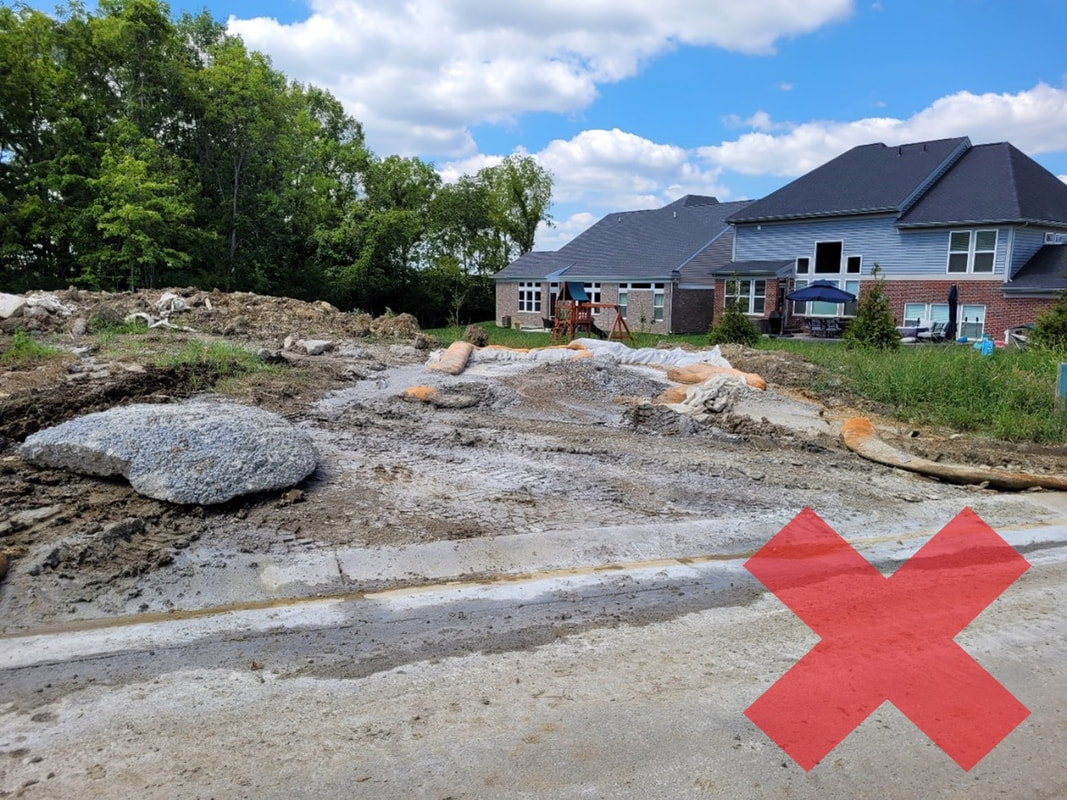 | 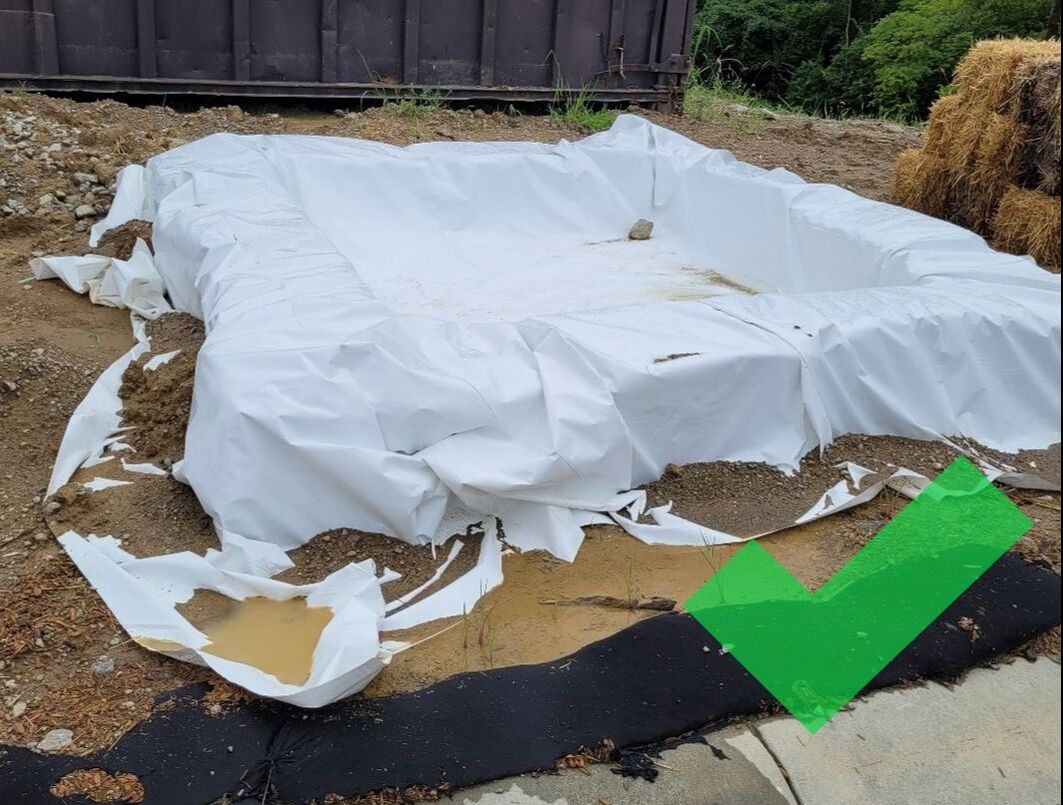 |
5) Stabilized Basins – Right out of the Gate Basin installation should be one of the first items in the construction sequence. Basins must be installed and functional before any upslope land disturbance takes place. This is an imperative step because basins are used to control both stormwater quantity and quality. Often after the basin is constructed, there is an idle period before seeding and strawing the basin. This can lead to increased erosion, the formation of rills and gullies on the basin embankments, and ultimately more sediment removal to achieve proper final storage capacity.
EASY FIX: Stabilizing the basin with seed and straw right after installation can help minimize the impacts of erosion, ensure the basin will operate as designed, and minimize sediment accumulation. A stabilized basin early on may save you time and money from having to remove sediment from the basin at project completion to restore proper storage volume. Don’t forget to install a skimmer structure right out of the gate, too!
EASY FIX: Stabilizing the basin with seed and straw right after installation can help minimize the impacts of erosion, ensure the basin will operate as designed, and minimize sediment accumulation. A stabilized basin early on may save you time and money from having to remove sediment from the basin at project completion to restore proper storage volume. Don’t forget to install a skimmer structure right out of the gate, too!
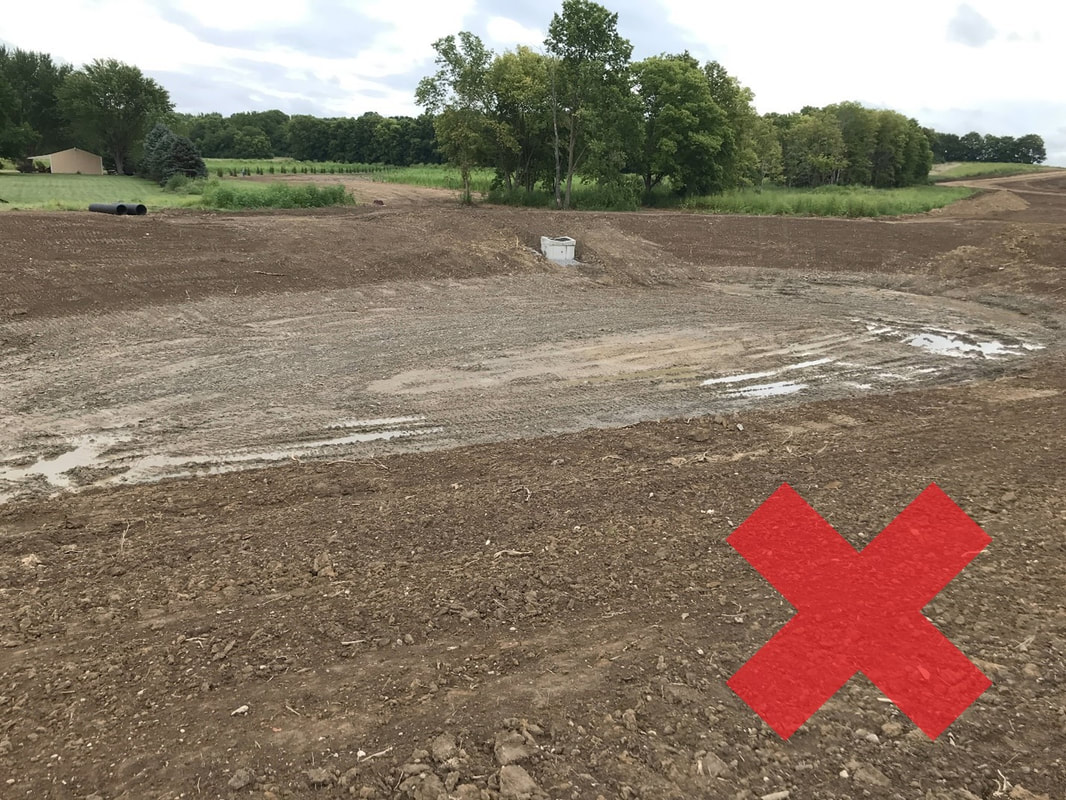 | 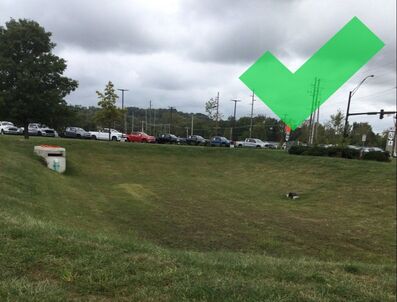 |
The Ohio Rainwater and Land Development Manual serves as a great resource for additional details and specifications regarding construction site good housekeeping items. Warren Co SWCD’s expert Urban Team is also available to help – contact us at (513) 695-1337 or [email protected].
Did you find this information helpful? We have more to share! Sign up to receive future editions of Development Digest as well as regulatory updates and information from Warren Co SWCD.
Did you find this information helpful? We have more to share! Sign up to receive future editions of Development Digest as well as regulatory updates and information from Warren Co SWCD.
Each summer in partnership with the Warren County Engineer's Office, Warren Co SWCD runs a basin inspection program to help homeowners and property managers maintain stormwater basins throughout the county.
As you may already know, basins are designed in accordance with the Ohio Environmental Protection Agency and local stormwater requirements. It is important to keep stormwater basins functioning because they collect and detain stormwater; help to settle out and hold sediment; protect local creeks, streams, and lakes; and help to reduce the potential for flooding.
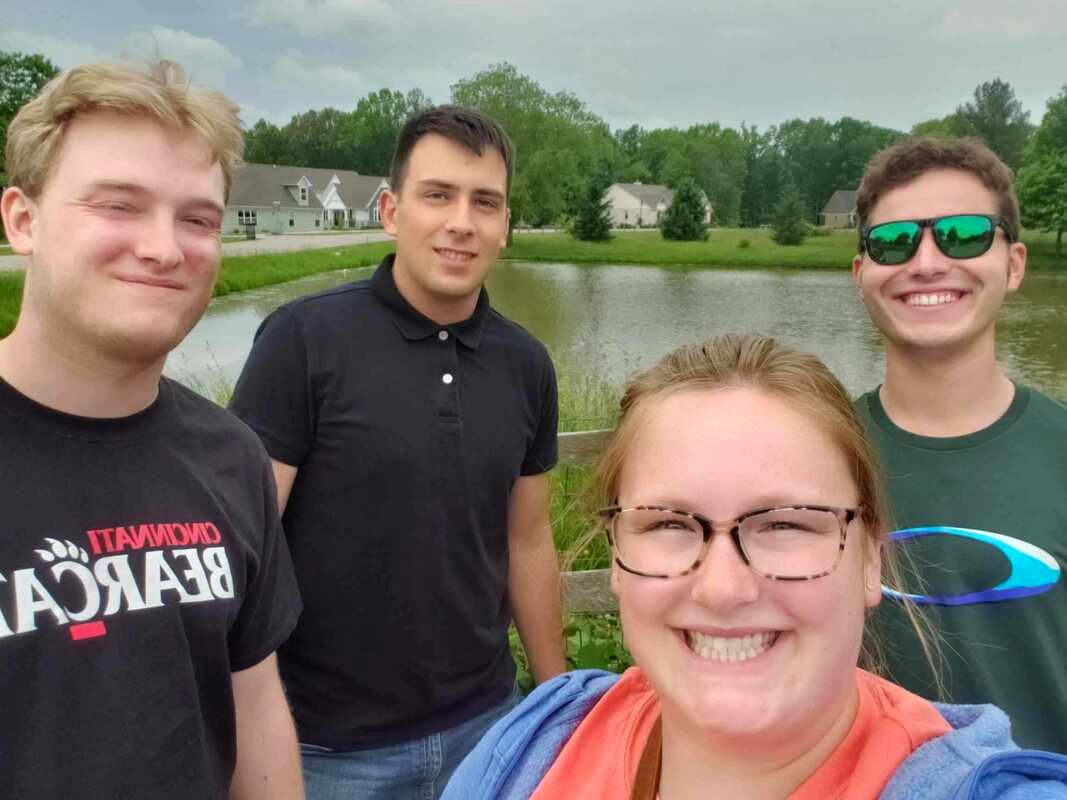
This week we are excited to welcome four interns who will spend their summer learning about the work Warren Co SWCD does to maintain soil health and water quality in our county while supporting the basin inspection program. You may see them out and about in the county in their vibrantly colored safety shirts! At the end of the summer, all of their stormwater basin inspections will be available online through our new stormwater basin inspection map found in the property owner assistance portion of our website.
As you may already know, basins are designed in accordance with the Ohio Environmental Protection Agency and local stormwater requirements. It is important to keep stormwater basins functioning because they collect and detain stormwater; help to settle out and hold sediment; protect local creeks, streams, and lakes; and help to reduce the potential for flooding.
This week we are excited to welcome four interns who will spend their summer learning about the work Warren Co SWCD does to maintain soil health and water quality in our county while supporting the basin inspection program. You may see them out and about in the county in their vibrantly colored safety shirts! At the end of the summer, all of their stormwater basin inspections will be available online through our new stormwater basin inspection map found in the property owner assistance portion of our website.
Meet the inspectors

Seth B.
"My name is Seth and I am studying environmental science at the University of Toledo. I think this internship at Warren Co SWCD will give me valuable experience in the field of conservation and natural resource management that I can take with me in my future career. I look forward to working on the projects this summer and learning about the conservation work that a county soil and water district does on a daily basis."
Sam K.
"Hello! My name is Sam and I am a third year student at UC studying Environmental Science. This is my first internship opportunity and I’m looking forward to furthering my career and having fun while doing it!"
Morgan S.
“Hello my name is Morgan and I am currently studying Environmental Engineering and Sustainable Agriculture at Cincinnati State. I chose this internship at the Warren Co SWCD because I am very passionate about protecting the environment and the work that is being done here. I also enjoy doing hands on work and being outside. I can see myself doing this type of work once I have graduated my program. I am excited for a summer of learning new things and applying what I have already learned in school.”
Harrison T.
"I am going to Ohio University in the fall for Wildlife and Conservation Biology under the Ohio Honors Program. I feel that this job will help me gain good experience in the conservation realm as well as get an insight into how government jobs operate as I plan on working for the ODNR or FWS after graduation."
Do you have questions about stormwater basin inspections or our internship program? Give our offices a call at (513) 695-1337!
"My name is Seth and I am studying environmental science at the University of Toledo. I think this internship at Warren Co SWCD will give me valuable experience in the field of conservation and natural resource management that I can take with me in my future career. I look forward to working on the projects this summer and learning about the conservation work that a county soil and water district does on a daily basis."
Sam K.
"Hello! My name is Sam and I am a third year student at UC studying Environmental Science. This is my first internship opportunity and I’m looking forward to furthering my career and having fun while doing it!"
Morgan S.
“Hello my name is Morgan and I am currently studying Environmental Engineering and Sustainable Agriculture at Cincinnati State. I chose this internship at the Warren Co SWCD because I am very passionate about protecting the environment and the work that is being done here. I also enjoy doing hands on work and being outside. I can see myself doing this type of work once I have graduated my program. I am excited for a summer of learning new things and applying what I have already learned in school.”
Harrison T.
"I am going to Ohio University in the fall for Wildlife and Conservation Biology under the Ohio Honors Program. I feel that this job will help me gain good experience in the conservation realm as well as get an insight into how government jobs operate as I plan on working for the ODNR or FWS after graduation."
Do you have questions about stormwater basin inspections or our internship program? Give our offices a call at (513) 695-1337!
Urban team BLOG
Every month, the Warren Co SWCD Urban Team dives deep into the world of land development as it relates to stormwater pollution prevention. The blog covers topics like erosion & sediment control best management practices (BMPs), state and local regulations, retention/detention basins, and the conservation of our natural resources. Stay up to date with Development Digest by signing up for WCSWCD Urban eNews!
Categories
All
BMPs
Inlet Protection
Permits
Sediment
Seeding
Storm Drains
Water
Archives
July 2024
June 2024
April 2024
March 2024
January 2024
December 2023
November 2023
October 2023
August 2023
May 2023
April 2023
February 2023
December 2022
November 2022
October 2022
May 2022
April 2022
March 2022
February 2022
January 2022
December 2021
November 2021
 RSS Feed