WARREN CO SWCD

conservation connection
​

  • Home
    • About
    • Contact Us
    • Board Supervisors
    • Staff
    • NRCS
    • Employment Opportunities
    • Volunteer Opportunities
  • Upcoming Programs/Events
    • Future Conservationist Day Camp
    • Lebanon Oktoberfest
    • Stream Encounters
    • Summer Contests
    • Urban Chat Series
    • Warren Water Striders
    • Women for the Land
    • Partner Events
  • Services
    • EQUIPMENT RENTAL
    • Contractor List
    • PERMITS >
      • Earth Disturbing in Warren County >
        • Earth Disturbing Permit Application
      • Floodplain Management >
        • Floodplain Determination Request Form
        • Flood Applications, Forms & Documents
    • For Residents >
      • Drainage, Erosion & Pond Assistance
      • Soil Testing
      • Water Testing
      • Maps & Historic Aerial Images
      • Backyard Conservation >
        • Ohio Native Plants
        • Rain Gardens
        • Rain Barrels
        • Composting
    • Stormwater Basin Inspections
    • For Agriculture Producers >
      • Nutrient Management
      • Land Preservation
      • Cover Crops
      • GIS/Mapping
    • For Businesses
    • For Municipalities >
      • Illicit Discharge Detection Program
  • Projects
    • 2024 H2Ohio Program
    • Caesar Creek Collaborative >
      • Meet the Collaborative
      • Our Work
    • Dicks-Creek-Watershed >
      • Hunter Park Project
    • Operation Rain Garden Grants
    • Pollinator Pathways
  • Education
    • Programs >
      • Classroom Programs
      • Youth Programs
      • Community Outreach
    • Virtual Classroom
    • Urban Conservation Learning Lab
    • Dagmar the Dragonfly
    • Turtle Education Ambassador
    • Program Loan Portal
    • Scholarship Opportunities
    • HS Envirothon
    • Educator Workshops
  • Blogs
    • Conservation Connection
    • Development Digest
    • Education Connection

4/27/2021

Ohio's Dragons

1 Comment

Read Now
 
Picture
Photo by Krzysztof Niewolny on Unsplash
Did you know that Ohio has a diverse population of dragonflies and damselflies? According to Ohio Department of Natural Resources, Ohio has approximately 164 recorded species. Their brilliant colors and striking markings make them very fun to watch. The immature stages of all species are aquatic, and these animals are found in lakes, rivers, ponds, and streams throughout Ohio.  Although many dragonflies and damselflies are prevalent, 13 species in Ohio are listed as endangered. These amazing creatures are indicators of excellent water quality and serve as barometers of the health of our waterways.

The family Odonata, which includes both the dragonfly and damselfly, has an amazing life cycle. According to Ohio Department of Natural Resources, “adults live a few weeks to a few months. The adults exist to reproduce and serve as great predators of insects such as mosquitoes and flies.”

“Mating dragonflies are referred to as being in tandem, and they couple together using specialized clamp-like structures. When transferring sperm, the pair assumes a ring-like position called the wheel position; somewhat suggestive of a valentine heart. Soon after mating, the adult female places her eggs into an appropriate substrate in a process called ovipositing. Depending upon the species, eggs might be deposited into water, saturated soil, on aquatic plants, or even drilled into plants or wet wood. From the eggs hatch larvae, which are sometimes called nymphs. These larvae are highly predatory, and are completely aquatic. In some species, larvae may take four years to reach the point of transformation into adults – far longer than the adult will live. When the larva is ready to transform to an adult, it crawls from the water and climbs onto adjacent plants. In an amazing metamorphosis, an adult dragonfly bursts from the shell of the larva.”

It is easy to tell the two apart. Damselflies have slender wings held over their back when at rest while the dragonfly has broader wings held outstretched at rest. Both species can be seen throughout the summer months near unpolluted water bodies such as rivers, streams, lakes, marshes, swamps, bogs, fens, or even temporary rain-pools.

Dragonflies and damselflies are among the only species that can fly in any direction (forward, backwards, and any other direction). These predators can change directions at lightning speeds to hunt for food – making them one of the most skillful aerial creatures.
Warren County Soil and Water recognizes the importance of the Odonata species, that’s why we have adopted Dagmar the dragonfly as our new education mascot! Dagmar can be seen at local events throughout the County in the Summer of 2021!

For more questions regarding Warren County Soil and Water Conservation District programs and/or technical assistance on water or soil questions, visit http://warrenswcd.com or call, 513-695-1337. 

Additional Resources: 
  • Ohio Department of Natural Resources Field Guides - https://ohiodnr.gov/wps/portal/gov/odnr/discover-and-learn/safety-conservation/about-ODNR/wildlife/documents-publications/backyard-wildlife-documents
  • The Ohio State University, Ohio Dragonfly Survey - https://ohiodnr.gov/wps/portal/gov/odnr/discover-and-learn/safety-conservation/about-ODNR/wildlife/documents-publications/backyard-wildlife-documents

Share

1 Comment

12/15/2020

Cutting Down on Salt is Good for the Environment

2 Comments

Read Now
 
Picture
With all the craziness of 2020, our winter weather better not get any big ideas! If snow and ice are perhaps in our future, it is worth reminding ourselves that deicing materials can have adverse effects to our environment, especially our water bodies.
Most of the popular deicing products sold are chloride-based products which contain salt with different combinations. Sodium chloride, otherwise known as salt, is the most widely used deicing material. Sodium chloride is an effective deicer, is inexpensive, readily available and easily stored. Chloride which is present in many of the common de-icing materials can damage vegetation, destroy soil’s structure and produce erosion, can damage and kill vegetation and can contribute to automobile corrosion.
Common de-icing materials:
  • Sodium chloride – Otherwise known as rock salt, is sometimes mixed with sand or other materials. It is most widely available.
  • Potassium chloride – This product melts snow to 20 degrees F.
  • Magnesium chloride - This product is effective to 5 degrees F. This product is considered less toxic to the environment.
  • Calcium chloride - This product has the lowest temperature threshold, working to –25 degrees. This product tends to be easier on plant material if excessive amounts are applied. This product is considered less toxic to the environment.
  • Beet Molasses – De-sugared sugar beet molasses is a agricultural byproduct that is created when sugar beets are used to make commercial grade sugar. A form of beet brine has become a useful tool for many highway departments.


Picture
While municipalities’ main priorities remain maintaining clear roads and highways while ensuring safe travel, many municipalities are looking at incorporating de-icing materials that are less impactful on the environment, and we can do that at our homes as well. Here are some tips for reducing or eliminating the use of deicers at your own residence:

  • Reduce salt use by adding sand for traction, although care is needed to avoid clogging storm drains. Natural clay cat litter also works well for this purpose.
  • Clear walkways and other areas before the snow turns to ice and avoid the need for chemical deicers.
  • Track the weather and only apply deicers when a storm is imminent. If a winter storm does not occur, sweep any unused material and store it for later use.
  • Only use deicers in critical areas and apply the least mount necessary to get the job done.
  • Apply salt at the right time. Don’t wait until snow is falling to get started. It takes more salt to melt accumulated snow than it does to prevent accumulation.
  • Apply salt where it will do most good, like hills, curves, shaded sections of road, and bridges. Use discretion when applying salt near sensitive streams or in drinking water source water protection areas.
  • More salt isn’t necessarily better. Warmer roads need less salt, and when it is below 10º F salt will not help at all. Applying less salt is also a more economical choice. Snow clean-up costs are reduced, as are damages to cars, roads, and bridges.
Other tips to consider:
  • If your source of drinking water is from you own private well, avoid applying salt near the well head.
  • Don’t use fertilizers as melting agents. Runoff can increase nutrient pollution.
  • Natural products such as wood chips, ash, sand, bird seed, cat litter and sunflower seeds will not melt ice but they can provide traction on slippery surfaces.
 
So when the next big winter storm strikes, strike back, but in an environmentally friendly way. For more questions regarding Warren County Soil and Water Conservation District programs and/or technical assistance on water or soil questions, visit http://warrenswcd.com or call, 513-695-1337.

Additional Resources:
  • K-State Research and Extension - https://www.ksre.k-state.edu/news/stories/2017/12/winter-deicing-landscapes.html
  • PennState Extension - https://extension.psu.edu/watershed-friendly-deicing
  • Minnesota Stormwater Manual - https://stormwater.pca.state.mn.us/index.php/How_salt_works_and_overview_of_deicing_chemicals
  • Oklahoma State University - https://news.okstate.edu/articles/agricultural-sciences-natural-resources/2019/gedon_deicing.html

Share

2 Comments

10/28/2020

The Pathway of Stormwater

2 Comments

Read Now
 
Picture
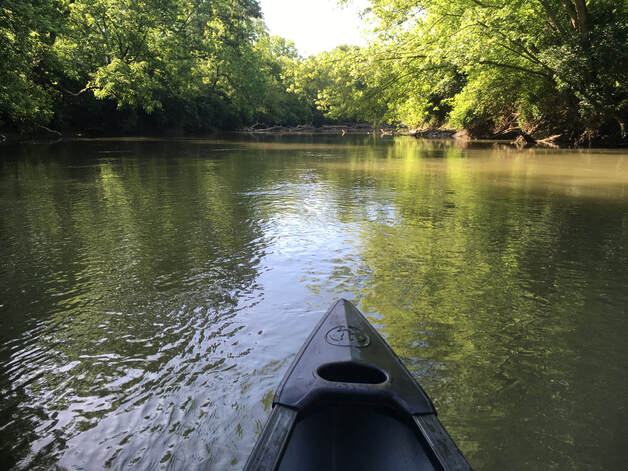
Whether you fish, kayak or just simply sit by the shores of a beautiful lake, having clean lakes and rivers is something we can all appreciate. But did you ever think about how our water travels and ends up in these bodies of water?

The USGS website (usgs.gov) explains how water travels best: “When rain falls onto the earth, it doesn’t just sit there, it starts moving according to the laws of gravity. A portion of the precipitation seeps into the ground to replenish the Earth's groundwater. Most of it flows downhill as runoff. Runoff is extremely important in that not only does it keep rivers and lakes full of water, but it also changes the landscape by the action of erosion.
In cases of developed areas where stormwater cannot infiltrate into the ground because of impervious areas, more runoff occurs. In urbanized areas, runoff must be collected by “extensive drain systems that consist of curbs, storm sewers, and ditches to carry stormwater directly to streams.  More simply, in a developed watershed, much more water arrives into a stream more quickly, resulting in an increased likelihood of more frequent and more severe flooding.”
Picture
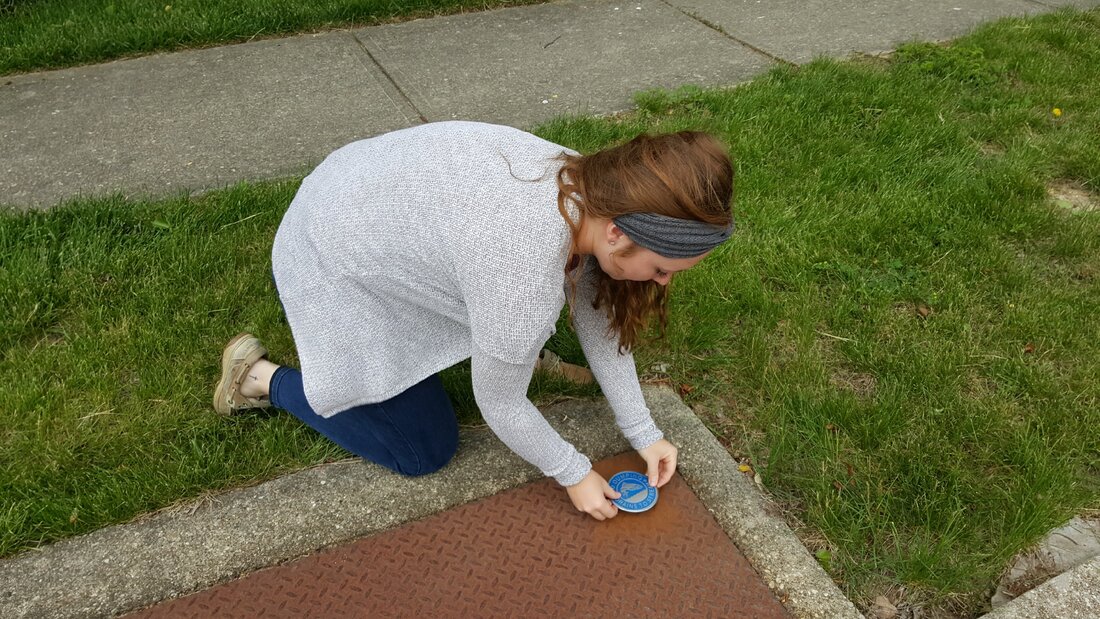
“As it flows over the lands and other surfaces, stormwater picks up potential pollutants that may include sediment, nutrients (from lawn/agriculture fertilizers), bacteria (from animal and human waste), pesticides (from lawn and garden/agriculture chemicals), metals (from rooftops and roadways), and petroleum by-products (from leaking vehicles).” We also have situations where people dump prohibited  materials (anything that is not stormwater) directly into storm drains not thinking of the impact that it has down stream.  
Polluted stormwater runoff can be harmful to plants, animals, and people. Understanding that our water systems are all connected and by helping to keep our stormwater clean, can help keep our rivers, lakes and streams clean.
Help out our local water systems by keeping “only rain, down the storm drain.”
Picture
Here are some items that you can do to help:
  • Plant trees
  • Disconnect/redirect downspouts
  • Use a rain barrel to capture rain from your roof
  • Plant a rain garden
  • Reduce impervious surfaces
For more questions regarding Warren County Soil and Water Conservation District programs and/or technical assistance on water or soil questions, visit http://warrenswcd.com or call, 513-695-1337.

Share

2 Comments

8/3/2020

What is a Watershed?

0 Comments

Read Now
 
Picture
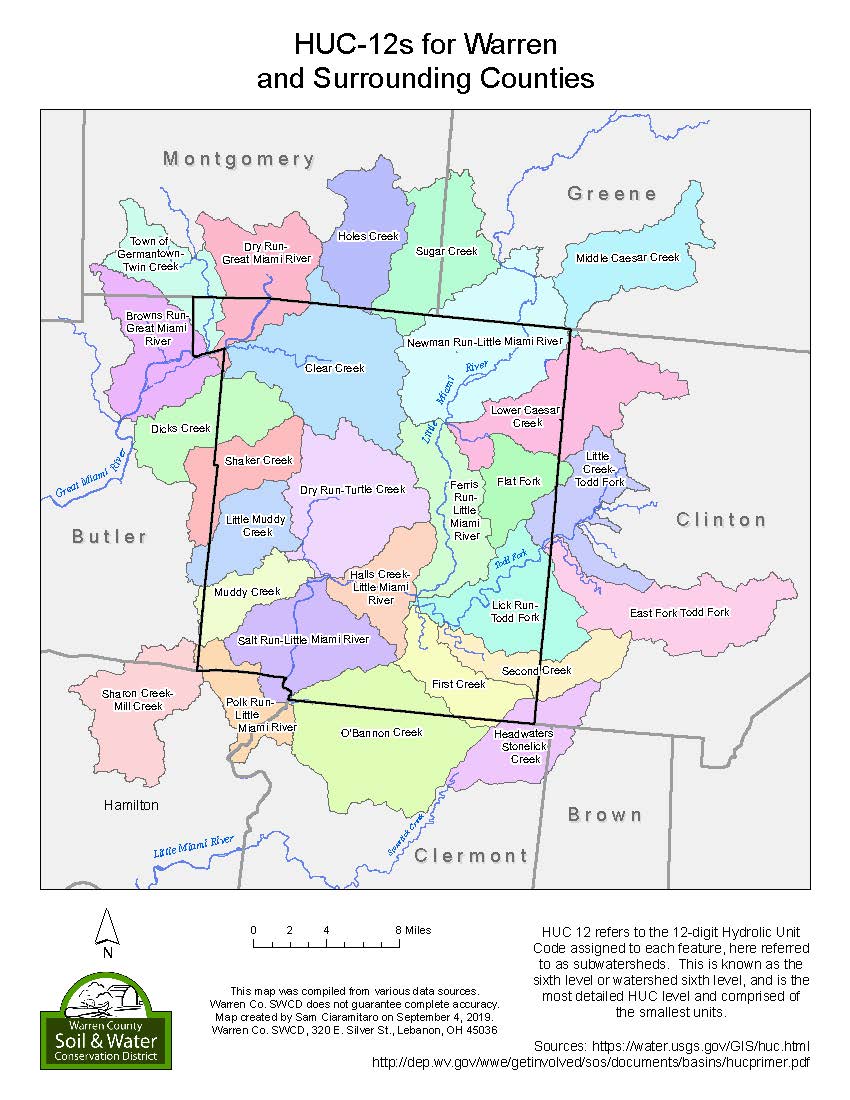
No matter where you live, the place that you call home is situated in a watershed: a land area that drains to a central location, such as a lake, river, or ocean. You can think of it as a shallow depression or bowl in the landscape, where the “rim” is a ridge or hill: even if your home is situated on the rim of the bowl, water washing off of your neighborhood is draining to the same place as areas on the opposite side of the bowl—everything is connected.  
Small watersheds make up larger watersheds. In fact, here in Southwest Ohio we are a part of the Ohio River Basin Watershed which drains to the Ohio River, Mississippi River and ultimately the Gulf of Mexico.  John Wesley Powell, scientist geographer, described watersheds as, “That area of land, a bounded hydrologic system, within which all living things are inextricably linked by their common water course and where, as humans settled, simple logic demanded that they become part of a community.” Watersheds come in all shapes and cross county, state, and national boundaries. In the continental US, there are 2,110 watersheds; including Hawaii, Alaska, and Puerto Rico, there are 2,267 watersheds. For more information on the Ohio River Basin watershed check out,  https://www.savelocalwaters.org/ohio-river-basin.html.

With this understanding that our water system is all interconnected, we can grasp that our actions affecting water in a smaller watershed can lead to issues in a larger watershed. Runoff from fields, lawns, and pavement could carry potentially harmful materials from our watersheds to our rivers and end up in our oceans. Even if you live, work, or play far from a river, your actions could have an impact on the quality of the water far from the initial source.   To research your watershed, check out the Environmental Protection Agencies - How's My Waterway interactive website - https://mywaterway.epa.gov/.

 For more questions regarding Warren County Soil and Water Conservation District programs and/or technical assistance on water or soil questions, visit http://warrenswcd.com or call, 513-695-1337. 

Share

0 Comments

2/7/2017

waters of the state

0 Comments

Read Now
 
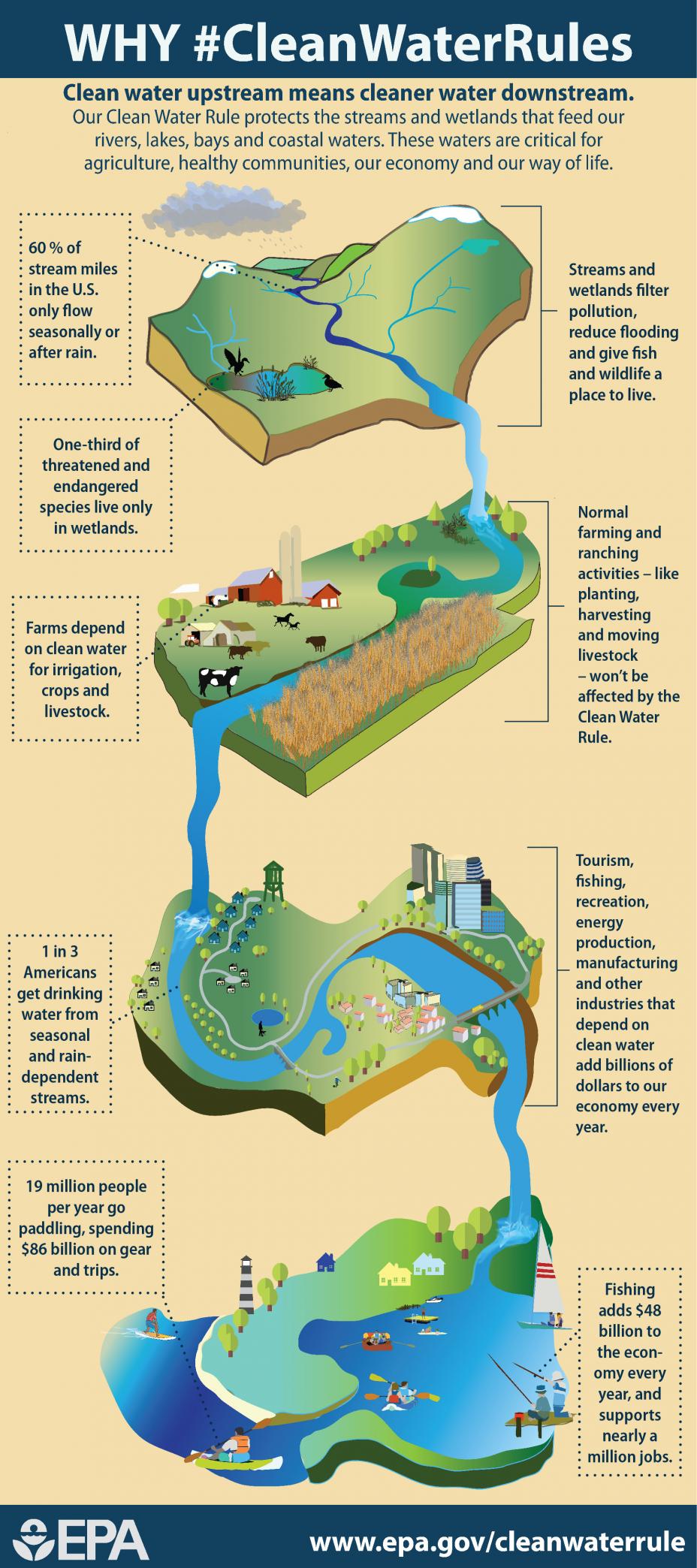
At Warren SWCD we care about water, clean water to be specific.  Why do we care?  Look below...  
Picture
The EPA established the Clean Water Rule to accomplish all the the goals shown above. The Clean Water Rule protects streams and wetlands that are scientifically shown to have the greatest impact on downstream water quality and form the foundation of our nation’s water resources. Read a summary the Clean Water Rule HERE. It's  important to recognize that the rule protects clean water without getting in the way of farming, ranching and forestry.  But how does the Clean Water Rule protect our waters?  The Clean Water Rule protects our waters by clearly defining regulations and permitting for any effort that might disrupt, modify, pollute or destroy the Waters of the State. Learn more about these permits on the EPA Website.

Share

0 Comments
Forward>>
Details

    Warren County SWCD Staff Blog

    A blog to keep you informed on all the latest news at Warren County SWCD and in the conservation world.

    Archives

    May 2026
    March 2026
    February 2026
    May 2025
    October 2024
    August 2024
    May 2024
    March 2024
    February 2024
    January 2024
    September 2023
    August 2023
    June 2023
    May 2023
    April 2023
    March 2023
    October 2022
    September 2022
    July 2022
    May 2022
    April 2022
    March 2022
    November 2021
    October 2021
    September 2021
    August 2021
    June 2021
    May 2021
    April 2021
    March 2021
    December 2020
    October 2020
    September 2020
    August 2020
    July 2020
    June 2020
    May 2020
    April 2020
    February 2020
    January 2020
    December 2019
    October 2019
    August 2019
    June 2019
    May 2019
    April 2019
    March 2019
    January 2019
    December 2018
    November 2018
    October 2018
    September 2018
    August 2018
    June 2018
    May 2018
    April 2018
    March 2018
    February 2018
    January 2018
    December 2017
    November 2017
    October 2017
    September 2017
    August 2017
    July 2017
    May 2017
    April 2017
    March 2017
    February 2017
    January 2017
    December 2016
    November 2016
    October 2016
    September 2016
    May 2016
    April 2016

    Categories

    All
    Agriculture
    Clean Water Rule
    Compost
    Conservation
    Contractors
    Cover Crop
    Drain Tagging
    Earth Day
    Flood Management
    Garden
    Great Outdoor Weekend
    H2Ohio
    Hazardous Waste Disposal
    Invasives
    Little Miami River
    Milkweed
    NACD
    Native Plants
    No-till
    Nutrient Management
    OPHI
    Pollinators
    Poster Contest
    Rain Barrel
    Rain Garden
    Rain Water
    Recycling
    Reforestation
    Soil
    Soil Health
    Storm Drain
    Trees
    Water
    Wildlife
    Winter
    Women For Land Conservation

Picture

Contact:

PHONE: (513) 695 - 1337
EMAIL:   [email protected]
HOURS: Monday - Friday 7:30am - 4:00pm (except holidays)

Connect:

Warren County Soil & Water Conservation District Copyright © 2016
Warren SWCD Privacy Notice. Emails are serviced by Constant Contact.  Constant Contact's Privacy Notice.
Photos from wuestenigel (CC BY 2.0), wuestenigel
  • Home
    • About
    • Contact Us
    • Board Supervisors
    • Staff
    • NRCS
    • Employment Opportunities
    • Volunteer Opportunities
  • Upcoming Programs/Events
    • Future Conservationist Day Camp
    • Lebanon Oktoberfest
    • Stream Encounters
    • Summer Contests
    • Urban Chat Series
    • Warren Water Striders
    • Women for the Land
    • Partner Events
  • Services
    • EQUIPMENT RENTAL
    • Contractor List
    • PERMITS >
      • Earth Disturbing in Warren County >
        • Earth Disturbing Permit Application
      • Floodplain Management >
        • Floodplain Determination Request Form
        • Flood Applications, Forms & Documents
    • For Residents >
      • Drainage, Erosion & Pond Assistance
      • Soil Testing
      • Water Testing
      • Maps & Historic Aerial Images
      • Backyard Conservation >
        • Ohio Native Plants
        • Rain Gardens
        • Rain Barrels
        • Composting
    • Stormwater Basin Inspections
    • For Agriculture Producers >
      • Nutrient Management
      • Land Preservation
      • Cover Crops
      • GIS/Mapping
    • For Businesses
    • For Municipalities >
      • Illicit Discharge Detection Program
  • Projects
    • 2024 H2Ohio Program
    • Caesar Creek Collaborative >
      • Meet the Collaborative
      • Our Work
    • Dicks-Creek-Watershed >
      • Hunter Park Project
    • Operation Rain Garden Grants
    • Pollinator Pathways
  • Education
    • Programs >
      • Classroom Programs
      • Youth Programs
      • Community Outreach
    • Virtual Classroom
    • Urban Conservation Learning Lab
    • Dagmar the Dragonfly
    • Turtle Education Ambassador
    • Program Loan Portal
    • Scholarship Opportunities
    • HS Envirothon
    • Educator Workshops
  • Blogs
    • Conservation Connection
    • Development Digest
    • Education Connection